
EBS science talk show to explore scientific revolutions and paradigms
The EBS science talk show "Science as a Hobby" will feature a discussion on scientific revolutions and paradigms with Professor Lee Sang-wook of Hanyang University. The program explores how scientific breakthroughs change the world and examines the complexities of Thomas Kuhn's influential work.
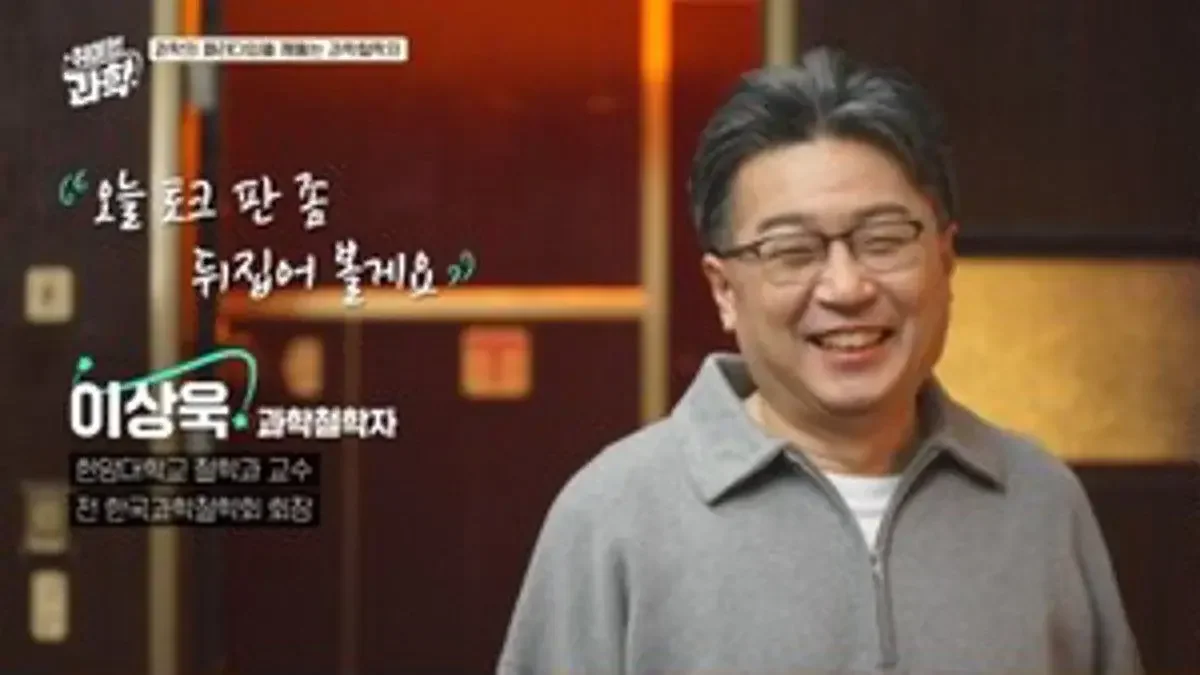
The EBS science talk show "Science as a Hobby" will air on Friday, November 20, 2026, featuring Hanyang University Professor Lee Sang-wook to discuss Thomas Kuhn's "The Structure of Scientific Revolutions" and how figures like Copernicus, Lavoisier, and Darwin changed the scientific landscape.
Defconn names Cho Yong-pil a "legend" of the music industry... Who is the "legendary" scientist chosen by scientists?
The EBS science talk show "Science as a Hobby" presents the theme "Scientific Revolution: How is the Game Changed?"
- Is an imperfect theory still a scientific revolution? Hanyang University Professor Lee Sang-wook explains scientific paradigms. - Thomas Kuhn's "The Structure of Scientific Revolutions" is difficult even for scientists... Lee Sang-wook explains there is a reason for the difficulty. - Is AI a scientific revolution? The scientific paradigm we are facing today.
In the science talk show EBS "Science as a Hobby," which delves into a world changing through science, MC Defconn and science communicators Hangseong, Professor Jang Hong-je, and Professor Jeong Woo-hyeon meet Professor Lee Sang-wook from the Department of Philosophy at Hanyang University to discuss scientific revolutions that overturn the scientific landscape.
The cast will discuss which figures have left great achievements in their respective fields. While Defconn names the "legendary" singer Cho Yong-pil, the three scientists offer differing opinions regarding Copernicus, Lavoisier, and Darwin. Amidst the uncompromising pride of the scientists regarding who constitutes a "legend" in the scientific community, Professor Lee Sang-wook proposes "whether they led a scientific revolution" as the criterion for choosing the greatest scientist. To find the answer to how a scientific revolution—which goes beyond mere discovery to change the entire landscape—occurs, the show will examine Thomas Kuhn's "The Structure of Scientific Revolutions."
"The Structure of Scientific Revolutions" is reportedly a difficult book even for scientists to read. When Defconn asks Hangseong, who owns a copy, if he finished reading it, Hangseong sheepishly admits that he attempted it several times but ultimately failed. In response, Professor Lee Sang-wook reveals the background of the writing, stating, "There is a reason why it is difficult." He explains that the publisher originally suggested compressing the intended content into a single encyclopedia page. It is further reported that because that version caused a great sensation, the originally planned book was never ultimately released. The show will use Professor Lee Sang-wook's explanations to unpack Thomas Kuhn's "The Structure of Scientific Revolutions," a book that even scientists find challenging.
The program will also explore the concepts of "paradigm" and "normal science," which are central to the book, through specific examples. The discussion will follow the different processes of scientific revolutions: from Copernicus, who overturned the existing framework by solving problems through a new perspective; to Lavoisier, who laid the new foundation for chemistry by defining and naming elements; to Darwin, who demonstrated that science can complement and develop alongside existing theories rather than just replacing them.
EBS "Science as a Hobby," which covers stories of scientists who overturned the scientific landscape to the scientific revolutions of the current era, will be broadcast on EBS1 on Friday, November 20, 2026, at 10:50 PM.
Covers K-pop for KSW Journal, and also writes about Culture and K-Variety.
Comments 0
Comments are currently disabled.