
Illegal dog slaughter persists during grace period before ban
Despite an 80% closure rate among dog breeding farms, illegal dog slaughter and the trade of former pets for meat continue during the grace period before the Dog Meat Consumption Ban Act takes effect.
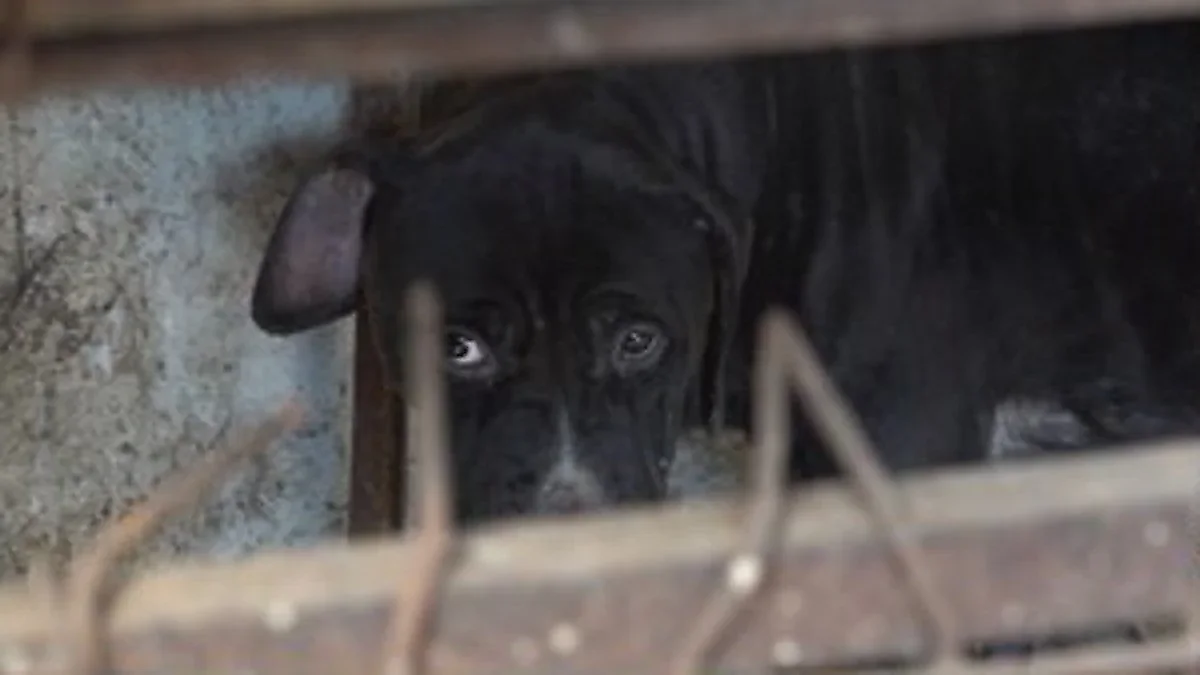
Despite an 82% closure rate among nationwide dog breeding farms, illegal slaughter continues as rising prices drive the trade of former pets through auction houses ahead of the Dog Meat Consumption Ban Act.
While government statistics show that the closure rate for dog breeding farms has reached approximately 80%, illegal slaughter continues to take place by exploiting the current grace period. As the implementation of the Dog Meat Consumption Ban Act makes distribution more difficult, prices have risen, leading to a situation where even dogs that once had owners are being traded for meat purposes.
The investigation began with Kang Min-gyu, who has been caring for dogs in outdoor yards and fields for 10 years. He has continued his volunteer work by providing clean water, feed, and medicine to abandoned and sick dogs. However, dogs began to disappear one by one. While owners claimed the dogs had escaped after being untied from their leashes, it was revealed that they were actually sold for meat purposes. During the investigation, the production team confirmed the existence of so-called "meat dog auction houses" where dogs are bought and sold for consumption.
Trading continued even during the grace period preceding the law's enforcement. It was also confirmed that it is difficult to punish individuals based solely on the fact that they traded dogs. Trucks leaving the auction houses were seen arriving at slaughterhouses. Although the time is approaching when the breeding, slaughter, and distribution of dogs for meat will be entirely prohibited, illegal slaughter is persisting by taking advantage of the gap before the Dog Meat Consumption Ban Act is implemented. Although the government statistics show a closure rate of about 80%, closing a business does not immediately mean the end of illegal activities.
| Category | Value |
|---|---|
| Dog breeding farm closure rate | Approximately 80% |
| Dog breeding farm closure rate (announced by Ministry of Agriculture, Food and Rural Affairs this past July) | 82% |
| Number of dogs remaining at one dog farm | 70 dogs |
| Number of dog farms nationwide | 1,537 locations |
| Number of closed farms | 1,265 locations |
Reality confirmed inside illegal slaughterhouses
The scene of the raid on an illegal slaughterhouse was gruesome. Inside the slaughterhouse, mother dogs that had given birth were identified, and numerous dogs were enduring painful times in poor environments. EBS reported that the dogs were kept in unhygienic and substandard conditions inside the slaughterhouse. Even during the grace period ahead of the law's enforcement, illegal slaughter continues in various places.
In particular, it was confirmed that not only dogs previously raised on dog farms but also a significant number of former pets with animal registration chips have recently been involved. Dogs that were once someone's pets were even being traded for meat. The whereabouts of dogs moving between meat dog auction houses and illegal slaughterhouses connect the issue of individual breeding to the actual state of the meat dog trade. EBS stated that it will track the hidden truths from the meat dog trade to the illegal slaughter sites.
The investigation did not end with confirming the existence of the auction houses. As it was revealed that the trucks leaving the auction houses arrived at slaughterhouses, it was confirmed that trading and slaughtering are not separate issues. In a situation where it is difficult to punish the act of buying and selling dogs alone, the broadcast captured scenes where illegal slaughter continues while the grace period remains. This reveals that such a structure may continue until the Dog Meat Consumption Ban Act is implemented.
Dogs that disappeared after 10 years of service
This broadcast also includes the story of Kang Min-gyu, who has been caring for dogs in outdoor yards and fields for 10 years. He has provided water and feed to abandoned dogs and medicine to sick ones. However, the dogs began to disappear, and while owners said they had escaped after being untied, it was confirmed they were actually sold for meat. As the dogs he had cared for over a long period disappeared one by one, the production team confirmed the existence of meat dog auction houses.
The disappeared dogs ultimately headed to slaughterhouses. EBS reported that the trucks leaving the auction houses arrived at slaughterhouses. Even ahead of the law's enforcement, illegal slaughter has not ceased, and the number of dogs traded for meat purposes continues to increase. Although the government statistics show the closure rate for dog breeding farms is about 80%, the whereabouts of the remaining dogs remain unclear. Other reports covering the same incidents and issues stated that 1,265 out of 1,537 dog farms nationwide have closed, representing a closure rate of 82%.
In relation to this, the broadcast introduced a situation where even former pets are being traded for meat as prices rise due to the difficulty of distribution caused by the implementation of the Dog Meat Consumption Ban Act. The reality that it is difficult to punish the act of trading dogs alone was also revealed. The process from meat dog auction houses to truck transport and arrival at slaughterhouses was captured on broadcast to show how illegal trading proceeds.
Challenges of protection and adoption after rescue
The problem for dogs that escape slaughterhouses does not end with rescue. At the scene of the raid on the illegal slaughterhouse, many dogs were identified along with mother dogs that had given birth, and a different reality awaited the dogs that narrowly escaped the crisis of slaughter. Finding a place to stay immediately is not easy, and long-term protection and adoption remain tasks to be solved. Additional protection space is also needed to facilitate further rescues.
This is the point mentioned by both the government and animal groups. According to the Ministry of Agriculture, Food and Rural Affairs this past July, 1,265 out of 1,537 dog farms nationwide have closed, resulting in a closure rate of 82%. However, criticisms continue that the system for tracking the movement and final disposition of dogs from closed farms is insufficient. While not all actions are permitted during the grace period of the Dog Meat Consumption Ban Act, it was confirmed on-site that unregistered meat dog businesses and cruel slaughter are actually continuing.
EBS shows the issues of protection and adoption after rescue through this special feature. The whereabouts of the disappeared dogs, the reality of the dogs left in slaughterhouses, and the task of finding places to stay after rescue are all presented as remaining challenges. The broadcast will air on EBS 1TV at 10 PM on November 7 and can be viewed again on the EBS website afterward.
Finally, the broadcast examines the actual conditions of the field and the remaining tasks ahead of the implementation of the Dog Meat Consumption Ban Act. Although the time is approaching when breeding, slaughter, and distribution will be entirely prohibited, illegal activities during the grace period and the problem of protection after rescue remain ongoing. EBS conveys that scene through Part 1 of the special feature 'Dogs in Crisis'.
Covers K-pop for KSW Journal, and also writes about Culture and K-Variety.
Comments 0
Comments are currently disabled.