
The Real India, Crossing Snowy Mountains and Deserts, September 21–24 at 8:40 PM on EBS1
Veteran traveler Jeon Myeong-yun explores the diverse landscapes and cultures of North India…
World Theme Travel: Another India, Land of Wind and Prayer
- From snowy mountains and plateaus to thousand-year-old faiths and diverse border cultures - A different world unfolds with every mountain pass! Meeting another India deep within North India.
Is this really India?! A different side of India met by 30-year veteran India traveler, 'Hanta' Jeon Myeong-yun! Another world within India where snowy mountains, glaciers, deserts, and grasslands unfold.
Three different greetings, different worlds met in one country. A land of seclusion beyond rugged mountain ranges, a place where thousand-year-old prayers and plateau cultures continue. Meeting life stories that grow deeper and wider the further one moves away from the world.
*Broadcast Schedule: September 21 (Mon) ~ September 24 (Thu), 2026, 8:40 PM, EBS1 *Curator: Jeon Myeong-yun (Asian History and Culture Writer). An expert on India for 30 years who began traveling India in 1996. He has written columns related to Asian history and culture for current affairs weeklies and dailies, served as an India correspondent for internet media, and has published numerous travel books and essays based on his expertise in Indian and Asian history and culture. Along with him, who believes that one can find new aspects of a country by looking at the lives of those living in travel destinations and the history of that land, we introduce the face of 'Another India'.
Part 1. From the Golden Temple to Dal Lake – September 21 (Mon)
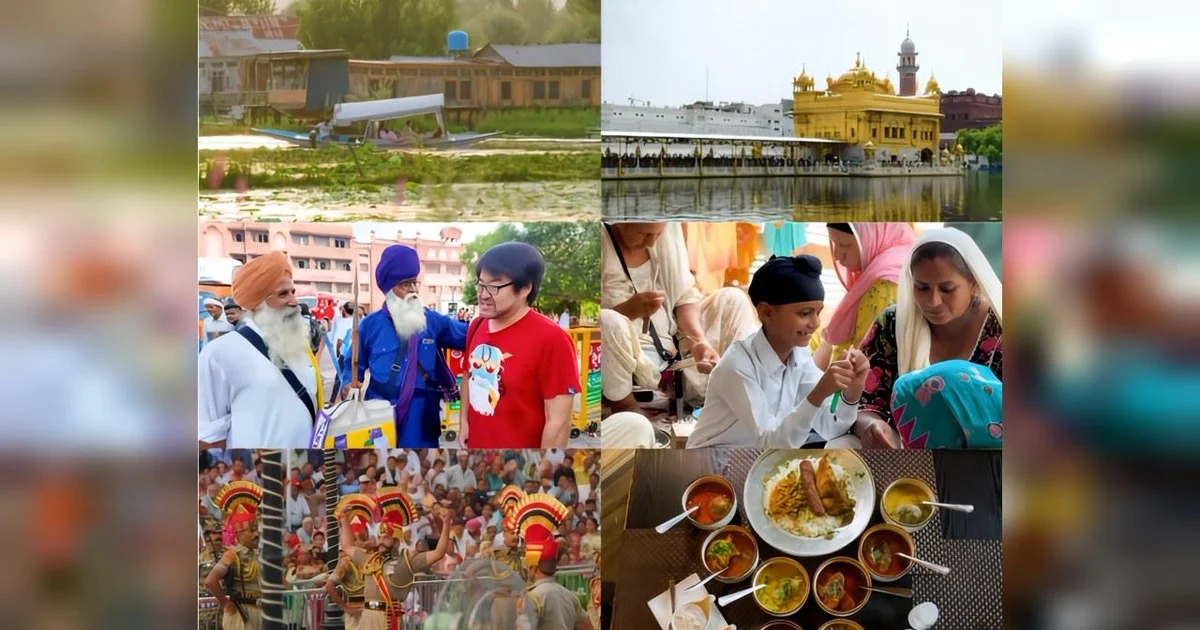
India, a country that feels both familiar and strange! Moving far beyond the images of sweltering heat, Hindu culture, and bustling cityscapes one might instinctively associate with 'India', we head to the land of glaciers and snowy mountains, the quiet land of seclusion in North India. The journey begins in Amritsar, a historical and cultural city in the Punjab state of Northwest India and the spiritual home for Sikhs worldwide. People wearing turbans are noticeable throughout the city. They are Sikhs who do not cut their hair for their entire lives to fully preserve the body given by God. Those who follow the teaching that 'all humans are equal before God' have five symbols of faith that represent Sikh identity. What are the five treasures of the Sikhs, which are rarely seen? The place everyone heads to in Amritsar is the heart of Sikhism, the Golden Temple. The four doors facing east, west, south, and north mean that it is open to everyone regardless of class, religion, race, or gender. The busiest place in the temple is Guru ka Langar, which provides free meals to everyone. People sitting side by side in one space, sharing a meal with the same tray. Encounter the Sikh faith that has stood against the caste system and discrimination not with guns and swords but with a single meal, and rediscover the meaning of equality and sharing by preparing ingredients firsthand. Leaving Amritsar, we head to the Attari–Wagah Border, which touches the border with Pakistan. It is said that every day at sunset, Indian and Pakistani soldiers engage in a confrontation of pride. Soldiers from both countries competing in prestige with high-lifted legs and disciplined movements. The heat reaches its peak as the shouts of citizens from both countries filling the border are added. Enjoy the confrontation at the world's hottest yet most peaceful border that takes place every evening. Next, we head to the city of water in North India, Srinagar. We head to Dal Lake, the 'Jewel of Srinagar', spread beneath the Himalayas. Following the calm waterways on a traditional wooden boat called a Shikara, the lives of people who shop and meet neighbors on the water unfold. A night at Dal Lake is spent in a houseboat, a resort built by the British over the lake in the late 19th century. Admire the delicacy of Kashmiri woodworking and paper crafts inside the houseboat. The next day, we visit the floating market that opens only at dawn. Enjoy the special dawn scenery of Dal Lake, with boats filled with vegetables grown by hand and floating fields on the water. The journey continues with the rich culinary tour of Srinagar. Enjoy the tastes and culture of Srinagar while eating traditional Kulfi, an ice cream frozen and stored without a refrigerator, and Wazwan, a traditional feast completed with various spices and lamb.
Part 2. The Secluded Valley of Glaciers and Nomads – September 22 (Tue)
We head to Zanskar, a remote area surrounded by snowy mountains and deep canyons deep within the Himalayas. It is a secluded land that can only be reached by a roughly 12-hour drive from Leh, the central city of Ladakh. First, we visit Stongdey Monastery, situated on a rocky cliff at an altitude of 3,800m. We join a day that begins with the chanting of monks at this Tibetan Buddhist monastery, founded in 1052 and holding a thousand years of history. Listening to the intense, low-pitched chanting perfected through special training, we calm our minds and witness the frugal lifestyle of practitioners through the simple breakfast of monks and believers. The journey continues to the Drang-Drung Glacier, the source of the Zanskar River. A place called the 'Glacier Dragon' due to its unique shape that looks like a crouching dragon! We marvel at the magnificent glacier that stretches for about 23km. Next, we seek out Phuktal Gompa, a cliffside cave temple located in the most rugged part of Zanskar. A place that once required a 4-day, 3-night trek from Padum, the central city of Zanskar! In this sacred space where practitioners have continued meditation for thousands of years on a cliff isolated from the world, we feel the long time of practice toward truth. We also encounter the special summer scenery of Ladakh. At Sani Lake, surrounded by mountains, we enjoy the excitement of 'summer-only' camping enjoyed by villagers, and we also meet the pastoral life continuing in the Doksa, temporary summer dwellings made by stacking stones on high-altitude meadows. We see the process of making clarified butter (Ghee) using a waterwheel and are served Gur Gur Chai infused with ghee. Following the daily lives of people who have moved their habitats along with their livestock according to the seasons, we trace the life of Ladakh lived alongside harsh nature. Passing through the meadows where Doksa is located and crossing the Suru Valley, another world unfolds. A place where Islamic culture begins, rather than the Tibetan Buddhist cultural sphere. Here, we meet the Bakarwal, a Muslim ethnic group that practices nomadic pastoralism by raising goats and sheep. We join the lives of people who live in accordance with the flow of nature, shearing sheep wool and making butter from sheep milk. The journey leads to Achambor, a beautiful highland village that resembles a landscape of heaven. Through Sadaka, a tradition of sharing food with neighbors to share blessings during joyful events, we feel the warm affection of those living together even in barren lands by sharing the traditional rice dish Biryani.
Part 3. Beyond the 5,300m Sky Path, Ladakh – Wednesday, September 23
We begin another journey from Leh, the central city of Ladakh. First, we head to Takthok Gompa, the only Nyingma temple in Ladakh. Nyingma is a sect characterized by magical and mystical practices, following the teachings of Padmasambhava, who brought Buddhism to Tibet in the 8th century. Here, once a year, the Takthok Tsechu festival is held to reflect on the wisdom of Padmasambhava. We feel the dynamism and majesty of the Guru Tsengyat Cham mask dance, which drives away evil spirits and prays for peace and prosperity, and share the joy of the festival with the villagers. Leaving the heat of the festival behind, we head to Khardung La, the second highest motor road in the world, located at an altitude of 5,300m. Amidst the snowy mountains covered in snow even in midsummer and the endlessly stretching highland scenery, we also meet the passion of travelers who have made their long-dreamed bike trips a reality. The place reached after crossing Khardung La is the high-altitude valley of Nubra Valley, situated between the Himalayas and the Karakoram. At the Hunder Sand Dunes, which were a stopover on the ancient Silk Road and feature sand dunes at an altitude of 3,000m, we face the unique scenery unique to Ladakh, where a desert unfolds beneath snowy mountains, along with double-humped camels that have followed the footsteps of ancient merchants. The journey leads to Turtuk, a border village at the northernmost edge of Ladakh. Having become Indian territory after the 1971 Indo-Pakistan War, this is a Baltistan village where Balti culture, distinct from Ladakh, continues. We meet the descendants and the old palace of the Yabgo dynasty, which ruled this area for about 2,000 years, and follow the history of Baltistan that continues even though the era of the dynasty has set. What stories are indeed passed down in the Yabgo royal palace? Staying in Turtuk, we also enter the daily lives of the people. We help with the harvest in fields created by unique soil where several crops must be grown together to grow well, and after work is finished, we taste the traditional herb yogurt Tsemik made immediately by harvesting crops from the garden-style fields in front of the house, and are served Korean food made by harvesting giant spinach. What is the taste of Korea passed down to Turtuk?
Part 4. Time of the Border, Drass – Thursday, September 24
On the way through the journey exploring the west of Ladakh, we encounter Sonamarg, which is called the Alps of India. In this 'golden meadow' that the Silk Road travelers heading from Kashmir to Ladakh once passed through, we immerse ourselves in the refreshing greenery rarely seen in Ladakh. Moving away from the meadows, the overwhelming colors decorating the canyons catch the eye. They are the tent camps of pilgrims! It is Baltal, the base camp for pilgrims heading to the Amarnath Cave Temple, one of the most important Hindu holy sites dedicated to Shiva, one of the supreme gods of Hinduism. We meet the deep faith and excitement of people who carry their own prayers as they cross the rugged land toward the holy site. The journey continues to Drass, the gateway city of Ladakh. We meet the short but dazzling summer that has arrived in this place, known as one of the coldest lands in the world. We encounter the daily life of Drass, where people cultivate green barley fields and prepare for the long winter that begins in September. Drass is a city where a connection was made during an India trip 15 years ago. Carrying a single photograph that could not be delivered 15 years ago, the protagonist goes to find that person. What kind of story will the long-held memory present? Next, we watch a polo match played on ponies on the plateau. A thrilling match unfolding in a stadium without fences! We watch the heated competition amidst the vivid atmosphere where horse tails flutter before our eyes. Crossing the rugged mountain pass of the Himalayas, Zoji La, we head toward Kargil, the second-largest city in Ladakh. First, we visit the 'Museum of Memories' in the village of Hunderman, which is close to the India-Pakistan border, to look into the memories of people whose livelihoods and nationalities were changed by war. Old houses, daily necessities, and letters exchanged between families who were separated to live in India and Pakistan quietly tell how the border changed people's lives. Passing Kargil and following the old roads of Ladakh, we encounter the Maitreya Buddha carved into a giant rock in Mulbekh. In the unique appearance of the Buddha statue, which blends Gandhara style with Hindu symbols, we realize that diverse cultures once flowed through this place. Next, we visit Lamayuru, where strange terrain resembling the lunar surface harmonizes with ancient Buddhist temples, to meet another face of Ladakh shaped by wind and prayer amidst the desolate yet mysterious landscape. A journey that crossed snowy mountains, passed through deep canyons and meadows, and followed a thousand years of prayer and memories of the border. Beyond the familiar landscapes of India, there was another world that has protected life and faith even amidst the harsh winds. At the end of the road traveled while meeting new landscapes and people everywhere, we engrave in our hearts the time of 'Another India,' a land where the wind makes paths and prayer sustains life.
* Related photos are available on the EBS institutional website (about.ebs.co.kr)-Cyber PR Office-Highlights, on the corresponding broadcast date.
◆ At a Glance
· Publishing Institution : EBS
· Category : World Theme Travel: Another India, Land of Wind and Prayer
· Distribution : September 20
Source : EBS Press Release
Korea Social Welfare Journal is striving to deliver press releases and welfare information more easily and accurately with the help of AI technology.


Comments 0