
Epigenetics Regulating Gene Expression... Highlighted on EBS ‘Science Is My Hobby’
EBS ‘Science Is My Hobby’ will explore the principles of epigenetics, where gene expression and function change due to the environment even without alterations to the DNA sequence. The program features experts discussing how factors like honeybee nutrition, fetal nutrient deficiency during the Dutch famine of 1944–1945, and cancer cell survival strategies influence the relationship between genetics and the environment.
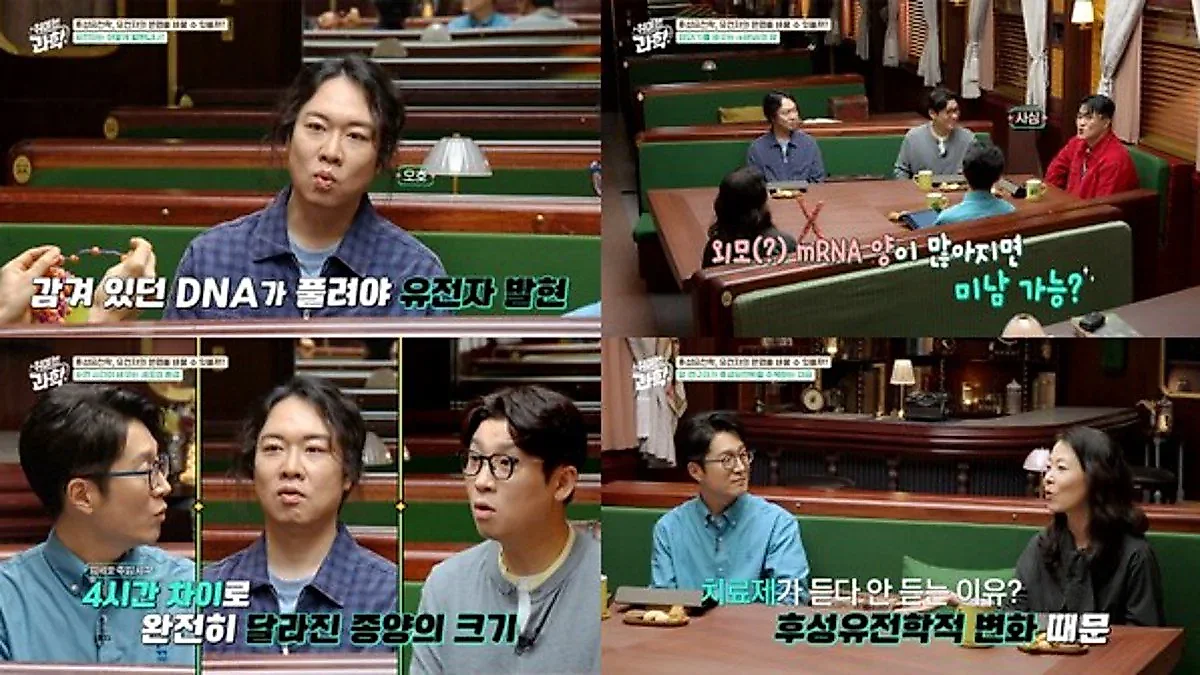
Do the genes inherited at birth determine the entire destiny of a life? EBS ‘Science Is My Hobby’ will cover epigenetics in its broadcast on October 16 at 10:50 PM. The content examines the principle where the expression and way genes operate can change depending on the environment, even if the DNA sequence itself does not change. The program features MC Defconn, Kwangwoon University chemistry professor Jang Hong-je, science communicator Hangseong, and Duksung Women's University College of Pharmacy professor Jung Woo-hyun, and they meet KAIST Graduate School of Medical Science and Engineering Associate Professor Lee Ji-min to introduce epigenetics research and cases. Through the food and growth environment of honeybees, nutritional deficiencies experienced during the fetal stage, and the survival strategies of cancer cells, the relationship between genetics and the environment is examined, and at the end of the broadcast, a song based on genes will be played.
Newly joined Professor Jung Woo-hyun starts questions from the changed appearance of the cast
According to EBS, molecular biologist Jung Woo-hyun, a professor at Duksung Women's University College of Pharmacy, newly joins this broadcast. Professor Jung is introduced as having been surprised by the appearance of Dr. Hangseong and Professor Jang Hong-je in the early broadcasts of ‘Science Is My Hobby’. The broadcast brings up pleasant stories surrounding the past and present appearances of the two, leading to questions about the influence of genetics and the environment on humans. The program examines how innate and acquired factors work on appearance and also covers whether "camera massage" is actually possible.
The cast for this episode includes Defconn, Professor Jang, science communicator Hangseong, and Professor Jung. They meet Associate Professor Lee Ji-min of the KAIST Graduate School of Medical Science and Engineering, who researches epigenetics, to hear the principles that regulate the expression of genes contained in DNA. As the new cast member Professor Jung joins the existing cast, the conversation regarding the cast's changes in appearance becomes the starting point for asking about the relationship between genetic background and the environment. EBS stated that the broadcast examines the influence of innate genes and the environment on traits.
Epigenetics deals with the fact that the way genes operate can change even if the DNA itself does not change. Professor Lee surprises the studio cast by naming the environment as the factor that has a greater influence on us than genetics. The broadcast explains the principle of how expression methods can differ even when the genes remain the same, and presents cases where organisms with similar genetic backgrounds can show different traits depending on the environment. It then sequentially covers how the influence of the environment on gene expression manifests in growth and health issues through cases of honeybees, the Dutch famine of 1944–1945, and cancer research.
Honeybees with the same genes, roles that change according to food and growth environment
The honeybee case introduced in the broadcast explains that individuals with the same genes are divided into queens and workers depending on their food and growth environment. While the genetic background of honeybees is similar, they take on different roles depending on what food they eat and what environment they grow in. The program connects this difference to the explanation of epigenetics, where genes do not operate only in a fixed manner, but their expression and operation methods can change. Professor Lee Ji-min introduces what principles are at work when the DNA remains the same but the outcome for the individual differs.
Professor Lee says that among genetics and the environment, the environment has a greater influence. The broadcast examines cases where the environment affects gene expression by presenting the food and growth conditions of honeybees. The core of epigenetics explained by the program is that even if the gene itself does not change, differences in the way it operates can occur. The cast identifies the factors that decide the fate of honeybees with similar genetic backgrounds and confirms the relationship between the environment and gene expression.
EBS stated that this episode also covers the influence of innate and acquired factors on appearance and traits. The conversation regarding the changed appearance of Dr. Hangseong and Professor Jang Hong-je compared to early broadcasts leads to a section asking how genetics and the environment act on human changes. Both the honeybee case and the story of human appearance pose the question of whether the results can be explained by genetic background alone. The broadcast unravels this question through the principles of epigenetics, where gene expression is regulated while the DNA sequence is maintained.
Nutritional deficiency experienced during the fetal stage, linked to health risks after adulthood
The broadcast asks whether epigenetic changes can also affect the next generation. The case presented is the fetuses who experienced the Dutch famine of 1944–1945 during World War II. The cast expects that the fetuses at that time "would have been short and thin" when they became adults, but the research results introduced in the broadcast show the opposite direction. People who experienced extreme nutritional deficiency during the fetal stage tended to have a higher risk of obesity and metabolic diseases after becoming adults.
EBS introduced that the possibility was raised that bodies adapted to insufficient nutrition developed in a direction to store energy. The broadcast examines what relationship exists between the environment experienced in the mother's womb and health after becoming an adult, and explains the clues presented by epigenetics. It is a case where the nutritional environment during the fetal stage can affect the subsequent body and health. However, this content was introduced as dealing with the tendency of health risks shown by fetuses who experienced the famine after becoming adults and the possibility raised as the background.
The cast re-examines the influence of genetics and the environment through the famine case. The relationship between extreme nutritional deficiency during the fetal stage and the risk of obesity and metabolic diseases after adulthood makes one question whether all future health can be explained solely by the genes possessed at birth. The program introduces this case from the perspective of epigenetics, where the environment can regulate gene expression. It then asks whether epigenetic changes can affect the next generation and examines the relationship between the environment experienced in the mother's womb and long-term health.
The adaptation process of cancer cells and genes expressed through song
Epigenetics is also linked to cancer research. Professor Lee Ji-min focuses on the survival strategies of cancer cells that survive and spread to other places even in environments lacking oxygen and nutrients. The broadcast introduces research that examines how gene expression and metabolism change during the process of cancer cells adapting to their surrounding environment. A core pillar of this episode is research that seeks clues for new treatments by analyzing the environment cancer cells are placed in and the resulting changes.
EBS stated that Professor Lee researches how gene expression and metabolism change during the environmental adaptation process of cancer cells. She examines the phenomenon where cancer cells survive and spread to other locations even under conditions lacking oxygen and nutrients, and analyzes the changes in gene expression and metabolism that appear in that process. Based on this, the broadcast introduces research that seeks clues for treatment. The relationship between the environment and gene expression discussed in the cases of honeybees and fetuses is essentially carried over to cancer cell research.
At the end of the broadcast, a meeting between science and music is arranged. The song ‘Genes Drawn on a Musical Staff,’ created by Professor Lee Ji-min and her husband, will be played. Professor Lee's husband is the music director for the movie ‘New World.’ Through the song that expresses genes through music, the cast encounters a different perspective on genes. EBS introduced it as a time to rethink the hidden possibilities within us, along with the epigenetic message that innate genes do not determine all of one's destiny.
The epigenetics episode of EBS ‘Science Is My Hobby’ will be broadcast on Friday, October 16, 2026, at 10:50 PM on EBS 1TV. Along with Professor Lee Ji-min, the cast will examine the principles of gene expression regulation and cases involving honeybees, the Dutch famine of 1944–1945, and cancer research. At the end of the broadcast, ‘Genes Drawn on a Musical Staff’ will be played.
Covers K-pop for KSW Journal, and also writes about Culture and K-Variety.

Comments 0
Comments are currently disabled.