
Familiar common sense explored through bones, objects, and sleep... ‘Knowledge Channel e’ to broadcast 3 episodes
EBS ‘Knowledge Channel e’ will broadcast three episodes from October 12 to 14, covering topics such as ancient deaths, the psychology of being unable to discard objects, and the pressure to sleep well. The series explores scientific, psychological, and social discourses by re-examining past common sense and modern conventions.
From October 12 to 14, EBS ‘Knowledge Channel e’ will broadcast three episodes themed around ancient deaths, the psychology of being unable to discard objects, and the pressure to sleep well. On Monday, the program will analyze the 5,300-year-old mummy Ötzi, discovered in the Alps glaciers, and the skeletal remains of a medieval man from Scotland to examine injuries left on the bones. On Tuesday, it will cover the mindset of being unable to easily discard objects, and on Wednesday, it will address the relationship between the attitude of trying to manage and optimize sleep and insomnia.
The broadcasts are structured to cross over scientific, psychological, and social discourses to re-examine past common sense and modern conventions. All three episodes will be broadcast on EBS1 at 12:40 AM. The titles for each episode are ‘Bones Do Not Lie’, ‘To Discard or Not to Discard’, and ‘I Told You to Sleep Well’.
| Broadcast Date | Topic | Time |
|---|---|---|
| October 12 | Death and skeletal remains from 5,300 years ago | 12:40 AM |
| October 13 | Psychology of being unable to discard objects | 12:40 AM |
| October 14 | Sleep obsession and insomnia | 12:40 AM |
Death from 5,300 years ago left in bones
The October 12 broadcast follows ancient deaths that left no witnesses or records through traces in bones and bodies. When a body was discovered in the Alps glaciers in 1991, it was initially thought to be a lost hiker. However, the body buried in the snow was confirmed to belong to a person from 5,300 years ago. The program explains that by examining the body of this mummy, named ‘Ötzi’ after the location where it was found, using X-rays and CT scans, clues to solve the mystery of death were revealed. The program tracks what happened to Ötzi through the investigation process of the body found in the glacier and the traces left on the body.
The broadcast also covers the skeletal remains of a medieval man excavated from Stirling Castle in Scotland. As a result of a detailed analysis by researchers at the University of Bradford in the UK in 2026, 167 fractures were confirmed throughout the entire body. The data introduces that these injuries resemble the patterns seen in modern traffic accidents. The question of what kind of impact was applied to the man in an era without automobiles is presented through the fractures left on the skeletal remains. The program looks into the traces of injury based on the analysis results.
The subjects covered in both cases are people whose names or lives were not recorded in historical records. The broadcast follows the clues confirmed through fractures and injuries left on the body and imaging examinations to see how science reads ancient deaths. The focus is on the process of investigating the traces left on the mummy and skeletal remains, re-examining events that have no contemporary eyewitness accounts or records through information found in the bones. The episode title is ‘Bones Do Not Lie’.
Memories contained in objects that could not be discarded
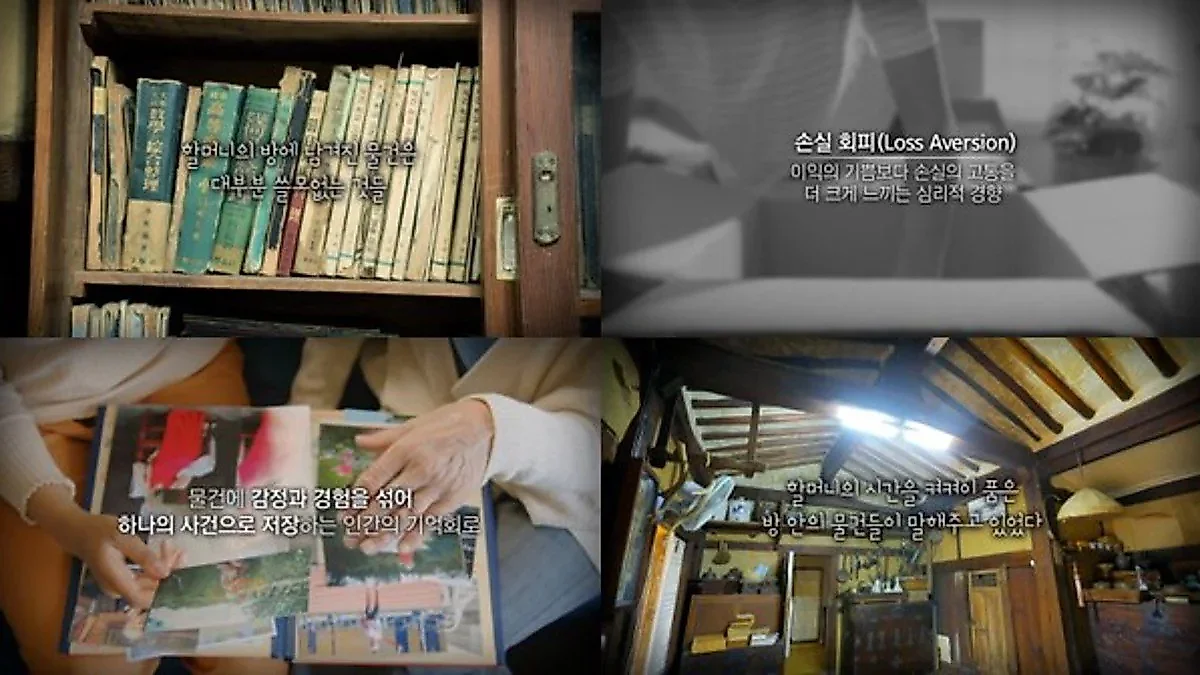
The October 13 broadcast, titled ‘To Discard or Not to Discard’, deals with the psychology of being unable to easily discard objects. While minimal life and the ‘aesthetics of emptying’—organizing spaces neatly—have established themselves as an ideal lifestyle for modern people, the original text explains that around elderly parents or grandparents, there are cases where old objects that have lost their function remain. In an environment where it is considered natural to discard objects that have served their purpose, the broadcast looks into why some objects are kept for a long time.
According to the broadcast introduction, the human brain stores memories by combining emotions and experiences with objects. Because of this, for the elderly, objects can be perceived as more than just simple tools, but as a part of themselves and a representation of the time they have lived and their identity. The content explains the reason why it is difficult to decide whether to keep an object based solely on its current utility through the connection between memory and experience. Rather than viewing the possession of old or non-functional objects simply as accumulating useless things, it examines the memories intertwined with those objects.
The broadcast also covers the phenomenon where organizing becomes more difficult after middle age. The original text introduces this as part of the natural aging process in which cognitive and emotional changes occur. In an era where objects are quickly and easily discarded and replaced, the intention is to examine the heart that cannot let go of old objects and to retrace a person's time and memories contained in objects. The broadcast places the lifestyle that encourages emptying alongside the heart of the person keeping the objects, examining the process by which objects take on meaning beyond being simple tools.
The pressure to ‘sleep well’ and insomnia
The October 14 broadcast, ‘I Told You to Sleep Well’, takes the phenomenon where the pressure to sleep well causes insomnia as its theme. The broadcast introduction states that as resting well and sleeping well emerge as essential elements for health and success, an increasing number of people are trying to manage and optimize their sleep. As sleep-related industries and devices develop, measuring sleep quality with numerical values has also become commonplace. The broadcast explains that while interest in sleeping better is growing, the number of people struggling because they cannot fall asleep every night is also increasing.
The original text reports that experts say an attitude of being excessively obsessed with sleep quality actually becomes a cause of insomnia. The content states that while sleep is not something that can be controlled or forced, modern people accept it as a task that must be perfectly managed, thereby pressuring themselves. The main content of this episode is to examine the relationship between the behavior of measuring and optimizing sleep and the pressure to fall asleep.
The broadcast looks back at the efforts of modern people to optimize sleep and examines ways to rest comfortably and fall asleep by escaping from the pressure to sleep. The episode title, ‘I Told You to Sleep Well’, puts forward the theme of the phrase "sleep well" and the pressure surrounding sleep. The development of sleep-managing devices and related industries, and the way measuring sleep quality with numerical values has become a daily occurrence, are also introduced as topics to be covered in the broadcast.
The three episodes will be broadcast every night at 12:40 AM on EBS1 from Monday, October 12, to Wednesday, October 14. EBS has organized this special project to sequentially cover ancient deaths, the psychology of being unable to discard objects, and insomnia caused by sleep obsession.
Covers K-pop for KSW Journal, and also writes about Culture and K-Variety.


Comments 0
Comments are currently disabled.