
EBS documentary to explore social bias between student and youth IDs
EBS will broadcast the third installment of its five-part special documentary series, "Reconstructing Youth Paths," titled "Student ID and Youth ID," on November 17. The program features a social experiment designed to reveal unconscious biases held by society regarding out-of-school youth.
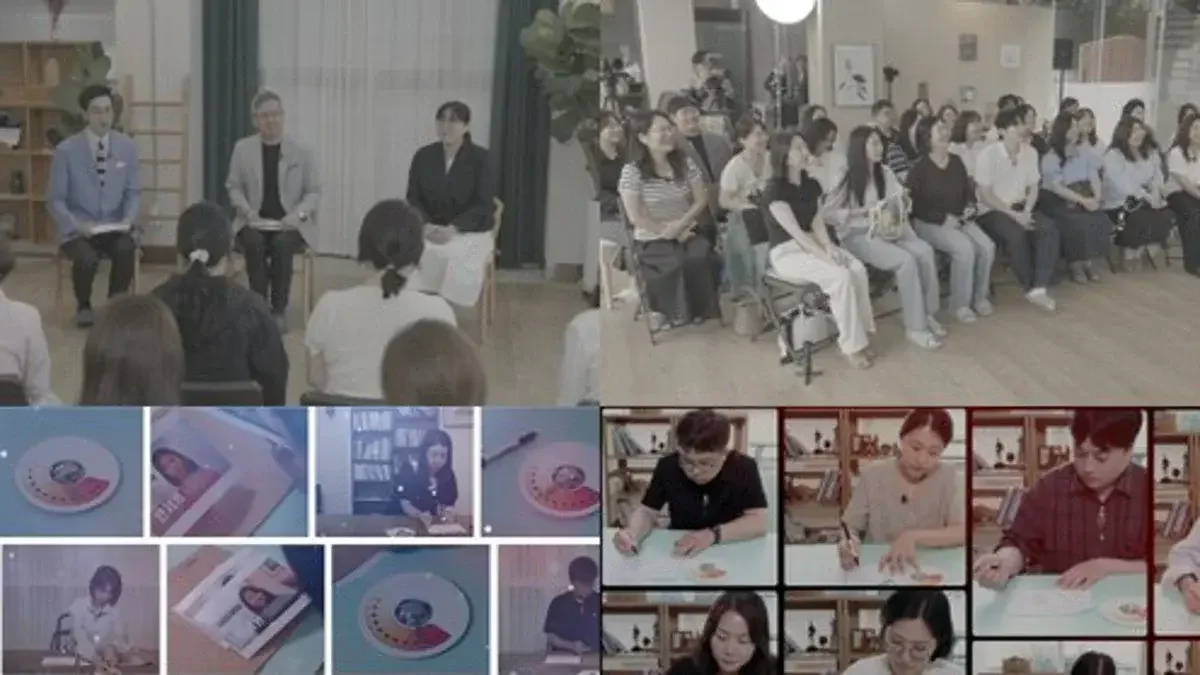
The EBS documentary "Student ID and Youth ID" will air on November 17, using a social experiment to reveal how unconscious bias affects the evaluation of out-of-school youth. During the experiment, some judges changed their candidate rankings after being informed that certain individuals were high school dropouts.
EBS will broadcast the third installment of its five-part special documentary series, "Reconstructing Youth Paths," titled "Student ID and Youth ID," on Tuesday, November 17 at 10:50 PM on EBS1. The series reflects on the uniform growth paths of society through the voices of out-of-school youth and "resting" young adults.
The documentary explores whether human judgment changes based on whether an individual is a "student" or not, even when all other conditions remain the same. Through a special social experiment, the production team examines the unconscious biases embedded within society and seeks ways to understand out-of-school youth as they are.
The prejudice created by 'Student IDs' and 'Youth IDs'
While a student ID proves affiliation with a school, a youth ID is a public identification card that proves one is a youth regardless of school enrollment. However, in our society, "youth" and "student" are often perceived as synonymous. The moment it is revealed that a person is not attending school, the perception of that youth often shifts.
“I hope the youth ID does not become a certificate that divides students from out-of-school youth,” says a youth reporter, marking the starting point of the story.
These perceptions manifest in various aspects of daily life. Stories include delays in entering movie theaters due to a lack of a student ID, being unable to participate in contests restricted to "enrolled students," and facing lectures or cold stares from strangers simply because of having dropped out of school. Although the reasons for leaving school and the subsequent paths of life vary, these individuals are often judged solely by the label "out-of-school youth."
The reality is that mere school enrollment is used to judge sincerity, social skills, and even the potential of children. This prejudice against them may be more deeply embedded in daily life than expected.
A selection process for youth representatives: Am I the real target of evaluation?
Participants in the experiment were tasked with selecting "K-Youth" representatives for an overseas training program. Acting as judges, participants scored candidates while watching introduction videos. In the second round of judging, information regarding the candidates' enrollment status was added: the same candidates were introduced to one group as enrolled students and to another group as out-of-school youth.
Upon receiving the information that a candidate had "dropped out," the judgments of some judges began to waver. Some gave higher scores to enrolled students, citing that social skills and cooperation are learned through school life, or even changed the rankings of candidates they had previously rated highest. “My ranking changed a bit after seeing the phrase 'high school dropout',” confessed one participant, revealing a prejudice they had not consciously recognized.
A surprising fact was revealed after the judging ended. The process, which participants believed was a selection for youth representatives, was actually a social experiment to confirm unconscious bias. Participants who believed they had judged fairly were surprised by the unexpected results and reflected on their own decisions, confirming that a single piece of information—a "Student ID" versus a "Youth ID"—can act as a source of prejudice.
When judgment is suspended, the unseen becomes visible
Following the revelation of the experiment's true purpose, the voices of out-of-school youth were heard. Their stories of being misunderstood as lacking social skills or having issues simply because they left school prompt a reconsideration of the biases revealed in the previous judging session.
How can the prejudices that operate unconsciously in daily life be reduced? Kwon Su-yeong, a professor of Counseling and Coaching at Yonsei University, suggests "epoche," which means the "suspension of judgment." She suggests that instead of assuming a child is playing games just because they are looking at a smartphone, one should first ask, "What are you doing now?" She explains that setting aside familiar prejudices and listening to the other person's story is the beginning of understanding.
The story of Seo-yeong (16), who is carving her own path outside of school, also draws attention. After dropping out, Seo-yeong challenged herself in various fields such as makeup and currently operates a startup developing a financial investment learning app for youth. For Seo-yeong, who dreams of becoming a Silicon Valley CEO, the two years spent outside of school were a time to discover her potential through challenge and failure.
Hosted by announcer Kim Jae-won, the program seeks solutions alongside Professor Kwon Su-yeong of the Counseling and Coaching Department at Yonsei University United Graduate School of Theology and Professor Lee Min-yeong of the Youth Education and Counseling School at Soonchunhyang University. The documentary "Reconstructing Youth Paths" Part 3, "Student ID and Youth ID," which asks what is needed for a society where understanding precedes judgment and all youth are respected as individuals with dreams regardless of school enrollment, will be broadcast on EBS1 at 10:50 PM on Tuesday, November 17.
Covers K-pop for KSW Journal, and also writes about Culture and K-Variety.
Comments 0
Comments are currently disabled.