
EBS ‘Young Philosophers’ to Feature Children's Debates on Juvenile Law and SNS Bans
EBS's children's philosophy program ‘Young Philosophers’ will broadcast a two-part special exploring the controversies surrounding juvenile law and the global trend of banning social media for minors. The program features children debating whether unintentional mistakes deserve punishment and whether banning SNS truly ensures safety.
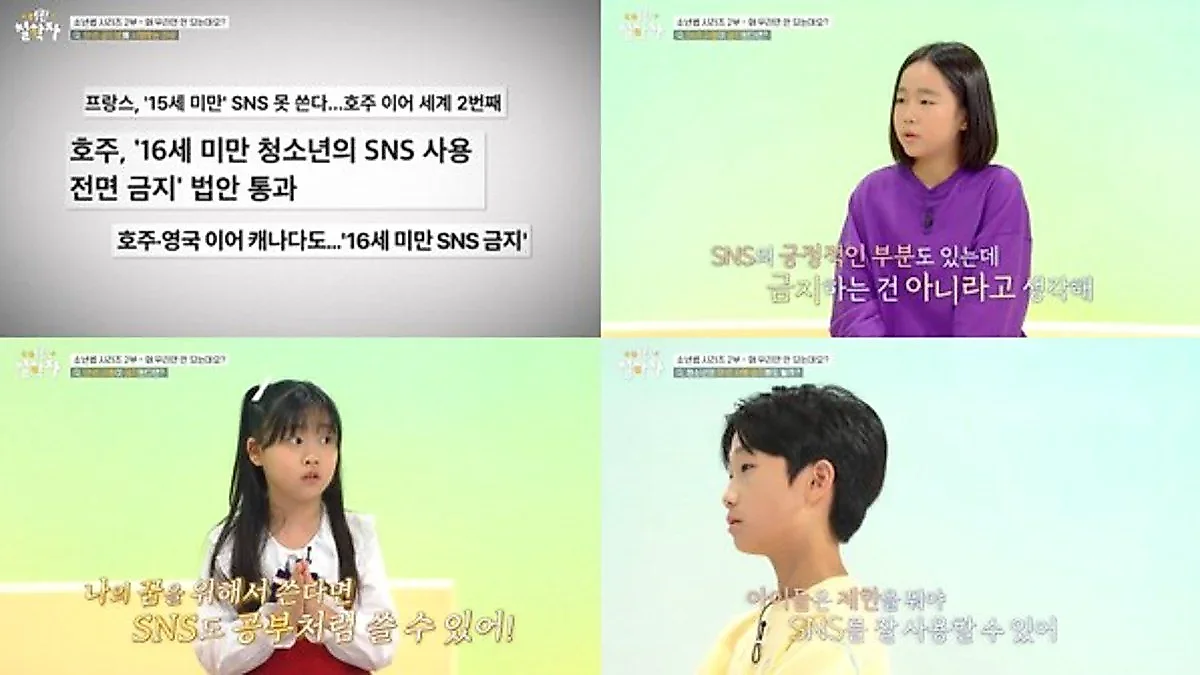
As controversies surrounding the lowering of the age for juvenile offenders continue and laws banning social media for adolescents spread worldwide, the EBS children's philosophy program ‘Young Philosophers’ will broadcast a two-part special on these two laws. In the specials, which will air on October 14 and 21 at 8:20 AM on EBS 1TV, children will directly debate the purpose and age standards of the juvenile law system, as well as the issues of protection versus interference regarding the ban on adolescent SNS use. While adults have primarily spoken about laws and systems for children, this broadcast is structured so that children exchange questions based on their own experiences and thoughts.
At the center of the two episodes lie the questions: "Should mistakes made without knowing be punished?" and "Will banning SNS truly make us safe?" Part 1 covers the juvenile law system, and Part 2 deals with the use and banning of SNS by adolescents. PD Lee Ji Hyun, who directed the program, stated, "I thought that if it is a law and system for children, we must also hear the voices of the children directly. In this special, children look into the meanings of 'rehabilitation' and 'punishment,' and 'protection' and 'interference' contained in each juvenile law based on their own experiences and thoughts."
Children Directly Question Juvenile Law and SNS Bans
According to EBS, this special covers the discussions on lowering the age of juvenile offenders and the spread of laws banning SNS for adolescents. While both issues involve laws and systems aimed at protecting children, the broadcast is structured to have children directly question how they perceive the purpose and application of these measures. Rather than adults merely discussing the laws, children step forward to debate and share their own experiences and thoughts. Part 1 examines the responsibility and systemic standards of juvenile offenders, while Part 2 looks at the benefits and dangers of adolescent SNS use.
‘Young Philosophers’ has previously presented questions through animation and captured children's debates in its program format. However, the guide released by EBS did not include the number of participants or the specific conclusions reached during the debates.
Although the topics of the two episodes are different, the broadcast focuses on examining how systems affect children through the children's own voices. The title of Part 1 is "I'm a Juvenile Offender, though?" and Part 2 is "Why is it only us who can't?" The first title contains the question regarding the juvenile law system and responsibility, while the second title contains the question raised by children regarding the SNS ban applied to adolescents. EBS explained that in the two episodes, children look into 'rehabilitation' and 'punishment,' and 'protection' and 'interference' based on their own experiences and thoughts.
An Eleven-Year-Old Boy Who Threw Toy Blocks Asks for Responsibility
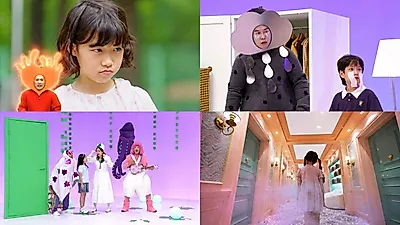
Part 1, "I'm a Juvenile Offender, though?", deals with whether responsibility should be assigned even for mistakes made without knowing. In the animation featured in the broadcast, an eleven-year-old boy throws toy blocks and seriously injures a passerby. The boy says he truly did not know. Based on this scene, children examine whether the reason of not knowing a mistake exempts one from responsibility. The introduction released by EBS puts the phrase "I really didn't know" at the forefront, posing a question that places the consequences of an action alongside the actor's understanding.
The broadcast also presents the problem that the term "juvenile offender" is increasingly being used as an excuse. It explains that systems established to protect children are conversely being misused. Accordingly, the debate does not stop at whether a specific action carries responsibility, but proceeds toward examining whether the original purpose of the juvenile law system and its current age standards are fair. EBS stated that children will examine whether there is responsibility for mistakes made without knowing and will also touch upon the purpose and standards of the system.
Amid the ongoing controversy over lowering the age of juvenile offenders, this episode does not merely place children as subjects of systemic discussion but establishes them as the subjects of the debate. However, the broadcast guide does not disclose what conclusions the children reach regarding the age standards or what pros and cons they present regarding the juvenile law system. The introduced content consists of the case in the animation and the questions for debate. The main content of Part 1 is how children use logic to discuss responsibility and systemic standards in response to the question, "Should mistakes made without knowing be punished?"
Examining Punishment, Rehabilitation, and Age Standards Together
The question addressed in Part 1 leads to the issue of how to treat a child who has committed a mistake. EBS stated that this special will examine the meanings of 'rehabilitation' and 'punishment' contained in the juvenile law. In the animation, a boy throws toy blocks and seriously injures a passerby, claiming he did not know. Children debate what that statement means when judging responsibility, and they discuss the purpose of the juvenile law system being created to protect children alongside the problem that the system can be misused.
The broadcast also questions whether the age standards of the juvenile law system are fair. The information released by EBS does not present specific numbers for the age standards or ways to change them. Therefore, the debate in this episode is introduced as a process where children examine the purpose and standards of the system together, rather than presenting a specific standard as the correct answer. The title "I'm a Juvenile Offender, though?" was also used as a question to make them think about both the fact that they are subjects of the system's protection and the issue of utilizing that system.
PD Lee Ji Hyun explained that in the juvenile law special, they look into rehabilitation and punishment based on the children's experiences and thoughts. Following this statement, Part 1 is not limited to only questioning responsibility for mistakes. The purpose of the system that protects children, the way a child who committed a mistake takes responsibility, and the relationship between punishment and rehabilitation all become themes of the debate.
Addressing the Two Faces of SNS: Making Friends and Malicious Comments
Part 2, "Why is it only us who can't?", takes the adolescent SNS ban as its theme. EBS introduced that the law banning SNS for adolescents is spreading from Australia to France. EBS explains that it can be a channel for making friends who are difficult to approach directly due to a timid personality and can also be a stage for nurturing dreams. Children bring out their experiences and thoughts gained through SNS during the debate.
At the same time, SNS is also a place plagued by malicious comments and endless algorithms. The broadcast does not only cover the positive aspects of SNS use or only emphasize the dangers, but presents the two faces experienced by children. Upon that, it poses the question, "Will banning SNS truly make us safe?" The theme of the debate is whether banning adolescent use is a measure for protection or interference that limits children's choices. EBS stated that children speak honestly about the two faces of SNS.
The title of this Part 2 contains the issue that adults can use SNS while children cannot. However, the released guide does not include specific systemic details such as the timing of the law's implementation, the applicable age, or the method of the ban. What the broadcast covers is the children's questions and experiences regarding the boundary between protection and interference, rather than the detailed provisions of the SNS ban. While Part 1 asks about punishment and rehabilitation regarding the juvenile law system, Part 2 examines safety and usage restrictions regarding the SNS ban.
The EBS ‘Young Philosophers’ juvenile law special will be broadcast on Wednesday, October 14 and 21 at 8:20 AM on EBS 1TV. Part 1, "I'm a Juvenile Offender, though?", is scheduled for the 14th, and Part 2, "Why is it only us who can't?", is scheduled for the 21st. The two episodes can also be rewatched on the EBS website.
Covers K-pop for KSW Journal, and also writes about Culture and K-Variety.
Comments 0
Comments are currently disabled.