
Surge in Stroke Among 20s and 30s; AI Analysis Extends Golden Time up to 24 Hours
The golden time for stroke treatment has been extended up to 24 hours thanks to AI analysis of perfusion imaging…
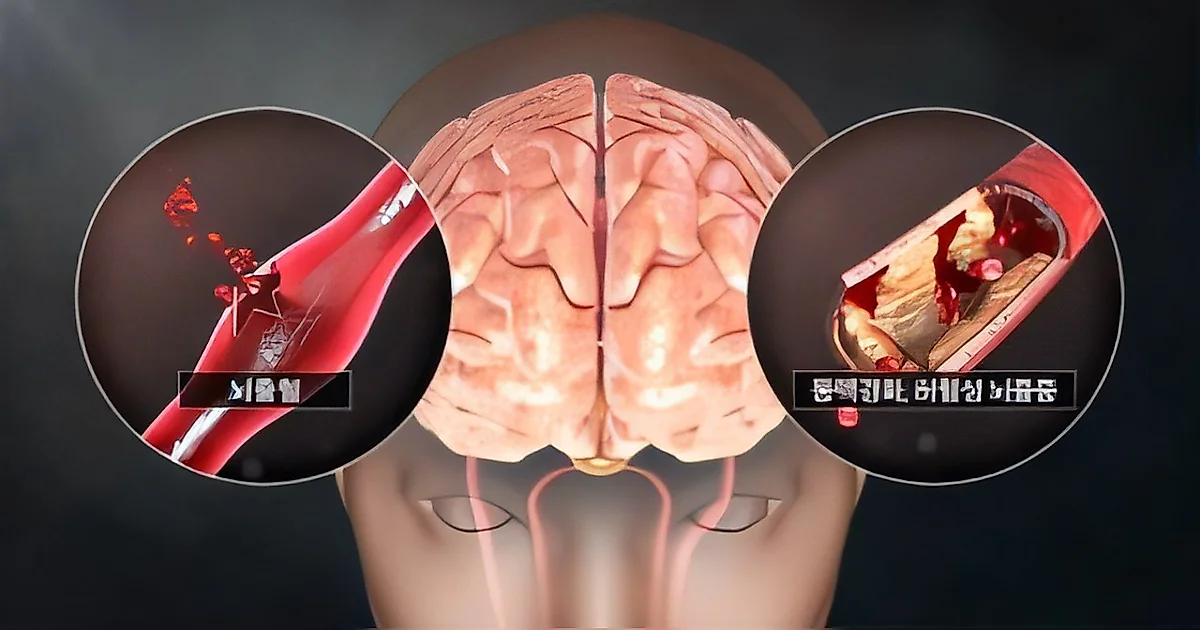
The golden time for strokes, which are getting younger, has changed!
Stroke is a dangerous disease where blood vessels in the brain are blocked or burst, which can leave fatal disabilities or even lead to death. It is unpredictable when and how it will strike.
The golden time is crucial for stroke treatment, and recently, the standard for the golden time has changed as AI has become capable of analyzing how much brain tissue remains viable through perfusion imaging. How has the golden time for stroke, which battles every second, changed?
In the EBS episode "The Golden Time for Strokes, Which are Getting Younger, Has Changed!", we explore strokes in young people and the changed golden time with neurosurgeon Professor Park Ik-seong.
*Broadcast Date/Time: Friday, October 2, 2026, at 9:55 PM, EBS 1TV
Stroke arriving even at a young age: Increasing stroke patients in their 20s and 30s, even pre-hyperlipidemia is dangerous!
Stroke, once a disease of the elderly, is now seeing an increase in young patients. The prevalence of stroke risk factors among the young population in South Korea has increased over the last five years, with hypertension increasing by 7.8%, diabetes by 2.7%, obesity by 12.8%, and dyslipidemia by 4.6%. Diabetes patients have an incidence rate of cerebral infarction nearly 2 to 4 times higher than normal individuals, and even pre-hyperlipidemia can lead to stroke. Furthermore, it has been revealed that among the younger generation, the proportion of cerebral hemorrhage is higher than cerebral infarction, making it more fatal than in the elderly.
A woman in her 40s, who was diagnosed with cerebral infarction early this year, had pre-hyperlipidemia. Although her levels were high, she did not take medication, leading to blocked vessels that required a thrombectomy, and as the vessels worsened again, she even underwent cerebral artery bypass surgery.
A man in his 20s was rushed to the emergency room and diagnosed with a stroke due to a blocked right cerebral blood vessel. What is the cause of stroke, commonly known as a disease of middle-aged and elderly people, occurring at a young age? He had been suffering from diabetes, and when he visited the hospital, his glycated hemoglobin level was high at 10.3. Therefore, it was decided to perform surgery after controlling his blood sugar. When glucose concentration in the blood rises due to diabetes, the surface of the blood vessel wall, which should be smooth, becomes rough and creates vascular debris. As the vessels gradually narrow due to this debris, a stroke occurs when the vessels leading to the brain narrow.
The golden time for stroke was within 4.5 hours; however, with perfusion imaging and AI, has the golden time extended to 24 hours?
The golden time is important for stroke treatment. Previously, the golden time for stroke was within 4.5 hours; if 4.5 hours passed, drug therapy was used, and if 6 hours passed, thrombectomy had to be abandoned. However, through CT or MRI perfusion imaging, it is now possible to see which areas lack blood and how much salvageable tissue remains. If the AI analyzes blood flow velocity, the amount of insufficient blood, and the areas of decreased blood arrival time, and finds that the salvageable area is wider than the damaged area, treatment can be attempted even if the golden time has passed.
A woman in her 60s was brought to the emergency room in a situation where a stroke was suspected due to vomiting and dizziness. She had been perfectly fine when she went to bed, but cerebral infarction occurred while she was sleeping, blocking her vessels. Originally, treatment would have been difficult as more than 4.5 hours had passed, but now, because the viability of brain tissue can be confirmed through perfusion imaging, treatment is possible. After first being administered emergency thrombolytics, the woman in her 60s underwent a thrombectomy using a micro-wire to break up the clot because the cerebral blood vessel was not yet fully cleared. It was confirmed that blood flow was normally restored as the clot was broken. Having exceeded the 4.5-hour golden time for stroke, she recovered her health four days later, received rehabilitation treatment, and vowed to live while managing her health diligently.
What if thrombectomy cannot be performed? Cerebral artery bypass surgery connecting scalp vessels!
A man in his 50s brought to the emergency room at the end of last August first experienced cerebral infarction in his 40s, and as the cerebral infarction recurred, his symptoms became more severe. When the first cerebral infarction occurred, he could still walk even with hemiplegia in his left limbs, but now he cannot even move on his own and is unable to speak due to slurred pronunciation. When large vessels are blocked, thrombectomy is a commonly performed procedure, but he was in a situation where thrombectomy was impossible because the sulcus, which provides access to the blocked vessel, was completely blocked. Since the cerebral blood vessel was on the verge of being almost entirely blocked, they decided to proceed with cerebral artery bypass surgery.
Cerebral artery bypass surgery is a procedure that finds the healthiest vessel and connects it to a scalp vessel to restore cerebral blood flow, but because the blocked vessel was much deeper than usual, toward the sulcus and cerebellum, it was a high-difficulty surgery. To perform the cerebral artery bypass surgery, the occipital artery flowing in the back of the scalp is dissected to secure a bypass vessel, and the dura covering the brain is removed to secure the cerebellar vessel. After blocking the blood flow of the cerebellar vessel with a clip, the two vessels, which are thinner than a hair and have a diameter of less than 2mm, are exquisitely joined together using thread thinner than hair. The surgery was completed after confirming that the blocked blood flow heading toward the sulcus and cerebellum was flowing stably again.
The man in his 20s, diagnosed with a stroke due to a blocked right cerebral blood vessel, underwent drug treatment as his right middle cerebral artery gradually narrowed due to vascular damage from diabetes, leading to cerebral infarction. However, because the ischemic area did not improve even after drug treatment, he underwent cerebral artery bypass surgery. He underwent temporal lobe cerebral artery bypass surgery, making it easy to connect the scalp vessel as the cerebral blood vessel was on the outside. When a perfusion imaging test was performed one week after the surgery, the previously insufficient cerebral blood flow had recovered to normal, unlike before the surgery.
In EBS , as the number of young stroke patients increases, we explore stroke treatment methods and the changed golden time with neurosurgeon Professor Park Ik-seong. The EBS episode "The Golden Time for Strokes, Which are Getting Younger, Has Changed!" will be broadcast on EBS 1TV on Friday, October 2, at 9:55 PM, and can be rewatched on the EBS website.
*Related photos are available on the EBS institutional website (about.ebs.co.kr)-Cyber PR Office-Highlights, on the corresponding broadcast date.
◆ At a Glance
· Issuing Organization: EBS
· Category: The Great Doctor
· Distribution: September 30
Source: EBS Press Release
Korea Social Welfare Journal is striving to deliver press releases and welfare information more easily and accurately with the help of AI technology.
Covers K-pop for KSW Journal, and also writes about Culture and K-Variety.



Comments 0
Comments are currently disabled.