
High-frequency radiofrequency treatment for trigeminal neuralgia introduced by Professor Jeong Hyeon-ho on EBS The Best Doctors
Professor Jeong Hyeon-ho will discuss trigeminal neuralgia and hemifacial spasm on the EBS program The Best Doctors…
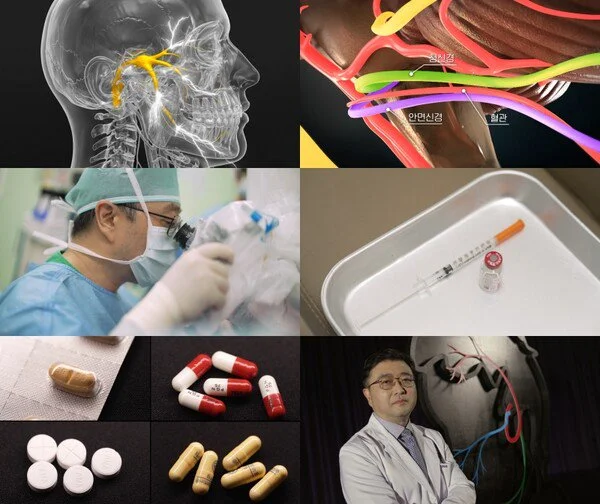
The Best Doctors: Lightning Strikes My Face! - Trigeminal Neuralgia and Facial Twitching
- Lightning-like pain that strikes the face without warning, what is its identity? - One side of the face keeps twitching and pulling, what is the cause? - Facial pain and spasms, is the cause located inside the brain?!
Speaking, chewing, laughing, and blinking. We take the movements of our faces for granted.
But what if one day, even small stimuli like brushing teeth or eating trigger lightning-like pain piercing through the face, and a twitch starting from one eye spreads to the corner of the mouth, causing one entire side of the face to move?
Two cranial nerve disorders that cause sudden pain and spasms in the face: trigeminal neuralgia and hemifacial spasm.
Trigeminal neuralgia is often misidentified as toothache, leading to unnecessary dental treatments or failure to find the cause, while hemifacial spasm is easily missed as it is often thought to be simple eye twitching.
The problem is that as symptoms recur, even an ordinary daily life is shaken. Eating and speaking become fearsome, and facing people can become a burden due to unwanted facial twitching. Although the symptoms appear on the face, the starting point can be in the cranial nerves and surrounding blood vessels. Then, why do the pain and spasms that torment the face occur? And what is the way to escape from the recurring pain?
In the EBS episode ‘Lightning Strikes My Face! - Trigeminal Neuralgia and Facial Twitching’, neurosurgeon Jeong Hyeon-ho explores trigeminal neuralgia and hemifacial spasm.
*Broadcast Date/Time: Friday, September 18, 2026, at 9:55 PM, EBS1
‘I even pulled my teeth...’ What is the identity of the pain tormenting my face?
A female patient in her 50s thought her recurring facial pain was a toothache and even had her teeth pulled. However, even after extraction, the piercing pain in her face did not disappear. She was belatedly diagnosed with trigeminal neuralgia and has been controlling the pain with medication, but as time passed, the dosage of medication taken to catch the pain kept increasing. Test results showed that surrounding blood vessels were compressing the trigeminal nerve, which is the 5th cranial nerve.
The trigeminal nerve is the nerve that transmits facial sensations to the brain. If surrounding blood vessels continuously compress the trigeminal nerve, a 'demyelination phenomenon' can occur, where the myelin sheath surrounding the nerve is damaged. Due to this, nerve signals are transmitted abnormally, and normal tactile information, such as touching or chewing, can be distorted into extreme pain. However, distinct vascular compression is not found in all cases of trigeminal neuralgia.
A male patient in his 60s also could not find the cause of his pain for a long time, to the point of pulling his teeth. It was idiopathic trigeminal neuralgia with no known cause. He suffered great disruption in his daily life, to the extent that he had to hand over even his telephone work to colleagues due to the frequent facial pain. After one round of treatment, the pain decreased, but the pain started again after about 11 months. In the examination, no distinct vascular compression explaining the pain was confirmed. The treatment chosen by these two patients to reduce pain is radiofrequency thermocoagulation. A thin probe is brought close to the trigeminal ganglion, which is responsible for facial sensation, and after communicating with the doctor while the patient is awake, stimuli are applied to find the exact area where the pain occurs. Afterward, high-frequency heat is applied to that area to selectively destroy the nerve fibers that transmit pain. The key is to block the problematic pain signals while preserving normal facial sensation as much as possible. Then, how much can the pain be reduced, and are there any side effects in the process of damaging the nerve? We look into the treatment process and effects of radiofrequency thermocoagulation in detail.
Trigeminal neuralgia, treated with radiation! - Gamma Knife
An 80-year-old female patient suffers from pain that feels like it is shooting her face several times a day. Because of the pain that comes without warning, even an ordinary daily life was not easy. She was diagnosed with trigeminal neuralgia and prescribed medication to reduce the pain, but this time, medication side effects were the problem. Due to severe dizziness and headaches, it was difficult to continue taking the medication, so she eventually had to find another treatment method.
Trigeminal neuralgia is generally treated with medication first, but side effects such as dizziness or headaches can appear. Especially in the elderly or when medication side effects are severe, it can be difficult to use sufficient medication, so other treatments are considered.
The treatment the patient chose is Gamma Knife surgery. It is a treatment that irradiates high doses of radiation to a specific part of the trigeminal nerve from multiple directions without incising the head. The precisely aimed radiation causes changes in the nerve that transmits pain, reducing the transmission of abnormal pain signals. The advantage is that it can treat the problematic nerve while minimizing damage to the surrounding brain tissue. Then, when does the pain decrease after Gamma Knife treatment, and what are the side effects that can occur by irradiating the trigeminal nerve with radiation?
From the eye to the corner of the mouth! Why is one side of the face twitching?
A female patient in her 60s whose one side of the face began to move regardless of her will. Due to the recurring facial twitching, facing people became increasingly burdensome, and she even started wearing glasses to hide the twitching face even slightly. The disease the patient was diagnosed with is hemifacial spasm.
Hemifacial spasm is a disease where the brain blood vessel continuously compresses the facial nerve, which is the 7th cranial nerve, causing the nerve to become excessively excited and resulting in repetitive spasms on one side of the face. The twitching, which mainly starts around the eyes, spreads to the corner of the mouth, and if it worsens, the entire one side of the face and the neck may move regardless of one's will.
The treatment chosen by the patient is Botox. By injecting Botox into the facial muscles where the twitching occurs, the signals transmitted from the nerves to the muscles are blocked, reducing excessive muscle movement to alleviate spasms. However, Botox is merely a treatment to reduce twitching; it does not eliminate the blood vessel itself that is pressing against the facial nerve. To directly address the cause of the twitching rather than relying on repeated treatments, microvascular decompression can be considered.
A male patient in his 40s has suffered from facial twitching for 20 years. The symptoms have now become so severe that his face twitches all day long, making even ordinary activities like sitting across from someone for a meal a burden. To escape the long-standing twitching, the patient decided to undergo microvascular decompression.
Microvascular decompression is a surgery that accesses behind the ear to directly locate the blood vessel pressing against the facial nerve and separate it from the nerve. The pressure is relieved by moving the compressing vessel and inserting Teflon so that it does not come into contact with the nerve again. During this process, it is also important to use a nerve monitoring device to check for changes in abnormal electromyography responses and to continuously monitor the functions of the facial nerve and the auditory nerve. Hemifacial spasm starts with mild eye twitching but can spread to the entire side of the face over time. How should it be distinguished from simple eye twitching, and how is it different from facial paralysis such as Bell's palsy? And what treatment is needed to escape from recurring spasms?
In the EBS episode 'Lightning Strikes My Face! - Trigeminal Neuralgia and Facial Twitching', neurosurgery expert Professor Jeong Hyeon-ho examines in detail everything from the causes of cranial nerve diseases that cause facial pain and spasms to various treatment methods. The EBS episode 'Lightning Strikes My Face! - Trigeminal Neuralgia and Facial Twitching' will be broadcast on EBS1 on Friday, September 18 at 9:55 PM and can be rewatched on the EBS website.
*Related photos are available on the EBS institutional website (about.ebs.co.kr)-Cyber PR Office-Highlights, on the corresponding broadcast date.
◆ At a Glance
· Publishing Institution: EBS
· Category: The Best Doctors
· Distribution: September 16
Source: EBS Press Release
Korea Social Welfare Journal is striving to deliver press releases and welfare information more easily and accurately with the help of AI technology.



Comments 0