
Aging increases acute myeloid leukemia risk in people over 50
The EBS1 program 'The Great Doctor' will feature hematologist Professor Lee Je-hwan to discuss acute myeloid leukemia, a disease that becomes increasingly prevalent and life-threatening after age 50. The episode explores how aging blood and mutations in the bone marrow lead to the disease and examines modern advancements in hematopoietic stem cell transplantation.
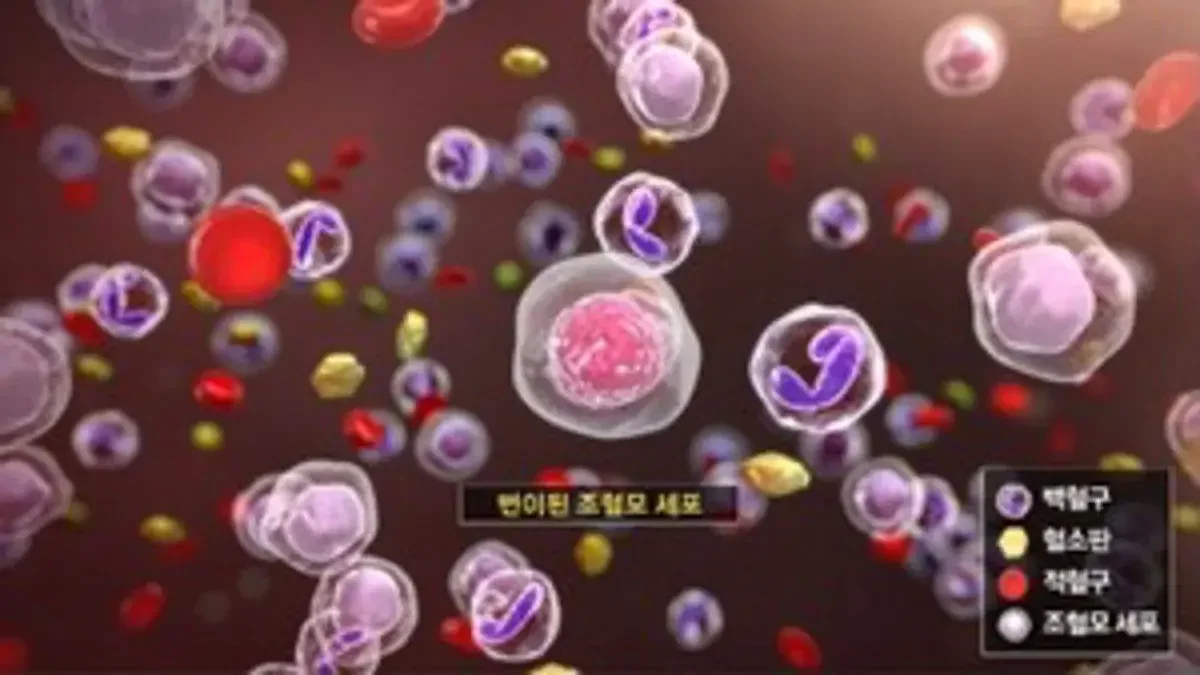
Hematologist Professor Lee Je-hwan will discuss acute myeloid leukemia and new treatments on EBS1 on November 13, 2026. The disease, which affects more than 84% of patients aged 50 or older, sees incidence rates exceed 10 cases per 100,000 people among those aged 65 and older.
Acute myeloid leukemia caused by aging threatens lives after the age of 50!
As the human body ages, the blood within it also ages. Over time, mutations can occur when the bone marrow produces blood, and as these mutant cells accumulate with age, the incidence of myeloid leukemia rises.
The journey of treating myeloid leukemia is long and arduous, beginning immediately upon diagnosis. Medical science has made dazzling progress in developing treatments to save blood, the source of life. How have leukemia treatments evolved?
In the EBS episode titled "Acute Myeloid Leukemia Caused by Aging Threatens Lives After 50!", hematologist Professor Lee Je-hwan joins to discuss acute myeloid leukemia and the latest treatments to protect our health.
*Broadcast date/time: Friday, November 13, 2026, at 9:55 PM, EBS1
Myelodysplastic syndromes, a representative disease caused by the aging of blood, is a condition that produces faulty cells unable to perform their roles. As these faulty cells increase, the bone marrow becomes crowded, yet the body suffers from anemia, frequent infections, and bleeding due to a lack of blood. If mutations are added, abnormal immature white blood cells—leukemia cells—increase; when these immature white blood cells exceed 20% of the bone marrow, it develops into acute myeloid leukemia.
A woman in her 50s was told long ago that she should not have children because her platelet levels were so low that she would face severe bleeding during childbirth. Although she miraculously had a daughter, her blood counts gradually worsened over time, leading to a diagnosis of myelodysplastic syndrome. Ultimately, she was diagnosed with acute myeloid leukemia in 2024 and underwent intensive chemotherapy, but her condition did not improve. Fortunately, her body responded to a new drug, and she found a 100% HLA-matched non-related donor. After a hematopoietic stem cell transplant two years ago, her condition improved, and she now receives outpatient treatment every eight weeks.
The frequency of acute myeloid leukemia increases with age, rising sharply from age 60, and exceeding 10 cases per 100,000 people among those aged 65 and older. More than 84% of patients are aged 50 or older, and the average age of acute myeloid leukemia patients is between 65 and 69, meaning leukemia threatens our later years.
When HLA (human leukocyte antigen) matching is equal, is a transplant from a younger non-related donor more advantageous than an older family member?
When performing a hematopoietic stem cell transplant, the HLA matching rate is examined. Because HLA is inherited half from each parent, parents and children always have a 50% match. In comparison, siblings have a one-fourth probability of being a 100% match, making siblings important in the past; however, recent advancements allow for half-match transplants within families between parents and children. Nevertheless, the success rate of hematopoietic stem cell transplants is higher using the cells of a younger child rather than an older parent.
A man in his 50s working at a cosmetics company felt fatigue ten years ago, which worsened until he was diagnosed with leukemia. While preparing for a transplant after chemotherapy, the leukemia relapsed, and because his HLA match with his sibling was less than 50%, there was no donor available to provide hematopoietic stem cells. However, his 12-year-old son, who is afraid of even injections, endured the collection of hematopoietic stem cells for his father. Ten years after living again through his son's blood, the father recovered his health and returned to work, and the 12-year-old son has now become a soldier.
What is the correlation between clonal hematopoiesis, a gradually being revealed cause of leukemia, and inflammatory bowel disease?
A woman in her 30s who recently received a hematopoietic stem cell transplant had both Behcet's disease, an inflammatory bowel disease, and clonal hematopoiesis, which can progress to leukemia. She underwent intestinal resection to treat the inflammatory bowel disease, but due to abdominal pain that did not respond to medication or surgery, she received a hematopoietic stem cell transplant as a last hope. Clonal hematopoiesis occurs when mutated hematopoietic stem cells increase abnormally. According to research results recently published by a research team at a hospital in the United States, substances produced by intestinal bacteria can grow mutant cells in the bone marrow. This experiment demonstrated that specific substances produced by intestinal bacteria can penetrate the aged intestinal barrier and enter the blood, inducing the proliferation of clonal hematopoiesis cells. In fact, clinical trials are being conducted to prevent the progression of myeloid leukemia by using drugs to block inflammation in patients with clonal hematopoiesis. To date, the largest risk factors for myeloid leukemia are aging, exposure to high-dose radiation and benzene, smoking, certain chemotherapies, and genetic predisposition.
In EBS , Professor Lee Je-hwan explores new treatments for acute myeloid leukemia and the process of moving toward a complete cure at a time when the incidence of myeloid leukemia increases with age. The EBS episode "Acute Myeloid Leukemia Caused by Aging Threatens Lives After 50!" will air on EBS1 at 9:55 PM on Friday, November 13, and can be viewed again on the EBS website.
Covers K-pop for KSW Journal, and also writes about Culture and K-Variety.



Comments 0
Comments are currently disabled.