
How Public Design Changes Daily Life… EBS ‘Class e’ to Air 4-Part Series
EBS and KCDF are jointly producing a four-part "Class e" lecture series titled "Why Public Design?" which will air on EBS 1TV from October 19 to 27. Experts in design, architecture, and communication will explore how public design solves daily problems and manages the relationship between cities and communities.
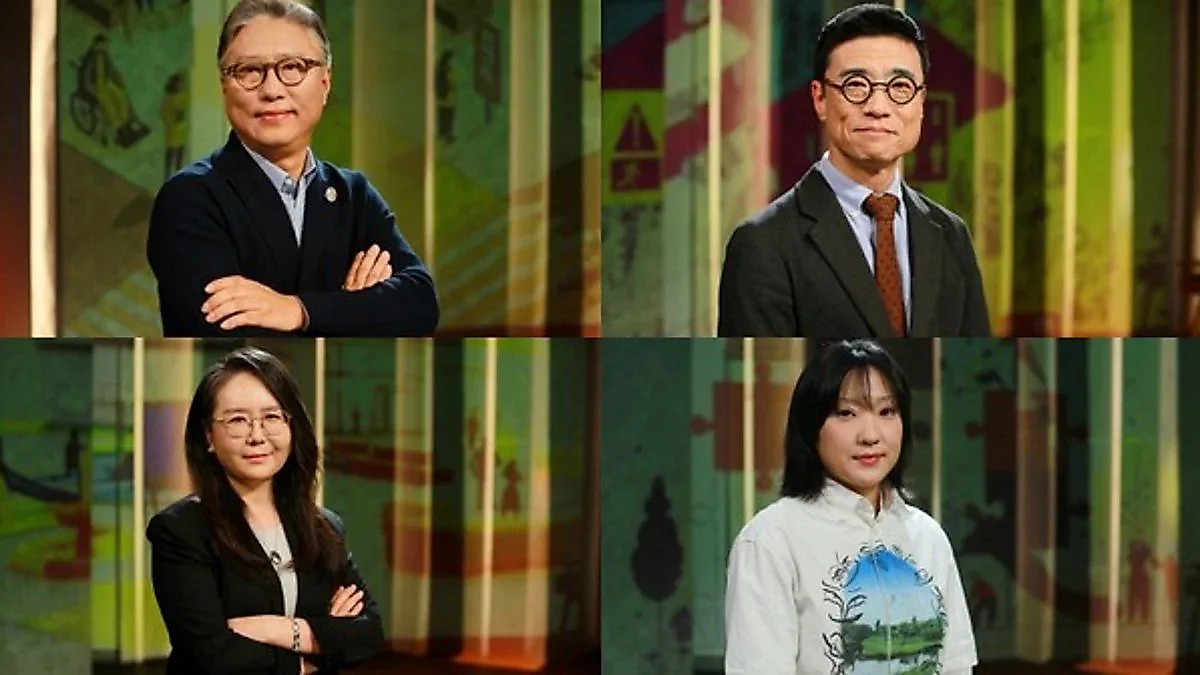
The lecture series "Why Public Design?", jointly planned by EBS and KCDF, will be broadcast on EBS 1TV from October 19 to 27. Four experts from various fields, including design, architecture, and communication, will serve as instructors to examine how public design solves daily problems and handles the relationship between cities and communities. The lectures will not stop at decorating the appearance of facilities but will cover cases of public design that encompass citizen behavior and experiences, as well as public services and cultural spaces. Kim Gyeong-bae, president of KCDF; Lee Jong-hyuk, representative of the Public Communication Institute and professor of the Department of Media and Communication at Kwangwoon University; Im Jin-yeong, representative of Open House Seoul; and art artist and furniture designer Yoo Hye-mi will each take one lecture.
| Broadcast Date | Lecture | Instructor |
|---|---|---|
| October 19 | Public Design Toward Everyone, For Everyone | Kim Gyeong-bae |
| October 20 | How Public Design Changes the World | Lee Jong-hyuk |
| October 26 | Good Public Architecture Makes a Good City | Im Jin-yeong |
| October 27 | Play, Cooperation, and Participation | Yoo Hye-mi |
Public Design Centered on Citizen Experience
The first lecture, "Public Design Toward Everyone, For Everyone," will be broadcast on October 19. Kim Gyeong-bae, president of KCDF, will lecture on the theme of changes and new possibilities in public design. The lecture examines the challenges faced by public design amidst social changes such as the expansion of digital services, entry into a super-aged society, the increase in single-person households, and climate change. President Kim emphasizes that the perspective of public design must shift from being facility-centered to being centered on citizen experience. He discusses directions that do not merely stop at creating and arranging facilities but consider the experiences people undergo while using public spaces and services.
Examples mentioned in the lecture include bus stop information screens, crosswalk shade canopies, public services, and cultural spaces. These examples are used to explore directions where anyone can enjoy good experiences without discrimination through the design of facilities and services encountered in daily life. The scope of examples is diverse, ranging from elements that convey information like information screens to shade canopies used at crosswalks, public services, and cultural spaces. The lecture explains public design not as a task limited to installing visually pleasing facilities, but as a task that responds to social changes while considering both citizen experience and public value.
The lecture title "Toward Everyone, For Everyone" contains the direction of public design that targets everyone without narrowing the users to a specific group. The super-aged society, the increase in single-person households, the expansion of digital services, and climate change are the changes addressed when discussing the challenges of public design in the lecture. President Kim examines the problems public design must solve amidst these changes and speaks of the necessity to shift the perspective from facility-centered to citizen experience-centered. Beyond examples of living spaces like bus stops and crosswalks, he introduces the scope of design situated throughout daily life by also covering public services and cultural spaces.
Small Interventions in Daily Life and Public Policy
The title of the second lecture, broadcast on October 20, is "How Public Design Changes the World." Lee Jong-hyuk, representative of the Public Communication Institute and professor of the Department of Media and Communication at Kwangwoon University, will serve as the instructor. The lecture uses places and facilities encountered in daily life, such as crosswalks, bus stops, and separate smoking booths, as examples. Professor Lee explains how small design interventions in such spaces, namely Nudge, change citizen behavior and develop into public policy.
In the lecture, the process of small interventions leading to policy is presented as a five-step process. Although the materials do not reveal specific names for each step, the theme of the lecture is to examine the connection between design interventions in daily life, changes in citizen behavior, and development into public policy. Crosswalks, bus stops, and separate smoking booths are all subjects treated as examples in the lecture. Through these examples, Professor Lee explains how design that induces citizen behavior intersects with the way public problems are addressed.
This lecture does not limit the application of public design to specific buildings or facilities. It examines how design can be intervened in crosswalks, bus stops, and separate smoking booths that citizens frequently use, and covers the flow where those changes lead to citizen behavior and public policy. The "How Public Design Changes the World" mentioned in the title refers to the process where small design interventions in living spaces cause behavioral changes and develop into policy.
Public Architecture and the Citizen's Experience of Hospitality
The third lecture, "Good Public Architecture Makes a Good City," will be broadcast on October 26. Im Jin-yeong, an architecture journalist and representative of Open House Seoul, will participate as a lecturer. The lecture introduces the Yeongju Senior Welfare Center, Gusan-dong Library Village, and Seojin School as actual cases. Through each case, Representative Im explains how buildings secure publicness and provide an experience of hospitality to citizens. The lecture places public architecture as a theme that deals with the relationship between cities and citizens and examines the content through specific architectural cases.
The Yeongju Senior Welfare Center, Gusan-dong Library Village, and Seojin School are the three cases covered in the lecture. The lecture explains how these buildings secure publicness and provide an experience of hospitality to citizens. The instructor, Im Jin-yeong, works as an architecture journalist and leads Open House Seoul. In this lecture, public architecture is treated not merely as a matter of creating buildings, but as an object to examine both the publicness of the buildings used by citizens and the experiences gained in those spaces.
The lecture title questions the relationship between good public architecture and good cities. To concretize this, the lecture presents architectural cases with different uses: a Yeongju Senior Welfare Center, a Gusan-dong Library Village, and a school. The main content of the lecture explains how public architecture secures publicness and the experience of welcoming citizens through these three cases. While previous lectures dealt with small design interventions in daily spaces and citizen behavior, the third lecture examines the relationship between actual buildings and the city through the eyes of an architectural journalist.
Participation Created Through Play and Cooperation
The final lecture will be broadcast on October 27 and will be led by artist Yoo Hye-mi, who works under the name Somokjang Semi. As an art artist and furniture designer, Yoo introduces public design with the keywords of 'play, cooperation, and participation.' The lecture cases include a mini-golf game that demands the release of a wrongfully convicted death row inmate. It also covers a cooperative game completed by multiple people pulling a rope together. The lecture conveys the experience of leading to social participation and solidarity through such play.
The mini-golf game is introduced as a content demanding the release of a wrongfully convicted death row inmate. The cooperative game, completed by multiple people pulling a rope, is an example of how participants move together. These two cases are examined by connecting play to participation and cooperation, which are keywords of public design. At the center of the lecture lies the experience of how light play leads to social participation and solidarity. Yoo introduces public design through play and presents not only individual actions but also cases of cooperation involving multiple people.
Artist Yoo Hye-mi's lecture decorates the end of the four-part series with the theme of 'play, cooperation, and participation.' While the previous three lectures respectively covered citizen experience, design interventions and policies in daily life, and public architecture cases, the final lecture introduces participation and solidarity mediated by play. The mini-golf game and the cooperative game are specific examples presented in the lecture. This course, jointly planned by EBS and KCDF, will be broadcast on EBS 1TV on Mondays and Tuesdays at 5:30 AM from October 19 to 27. Replays are provided on the Class e website and the EBS Culture YouTube channel.
Class e is an EBS knowledge and culture program that started in 2020. It is introduced as a program that delivers knowledge and insight piercing through the times through lectures by experts in each field. 'Why Public Design?' is a four-part project where four instructors cover the scope of public design through different fields and cases. After the broadcast, it can be watched again on the EBS Class e website (classe.ebs.co.kr) and the EBS Culture (@EBSCulture) YouTube channel.
Covers K-pop for KSW Journal, and also writes about Culture and K-Variety.

Comments 0
Comments are currently disabled.