
EBS Knowledge Channel e to broadcast three consecutive days, covering everything from space debris responsibility to fandom and the psychology of power
EBS's Knowledge Channel e will air a three-part special series from September 21 to September 23…
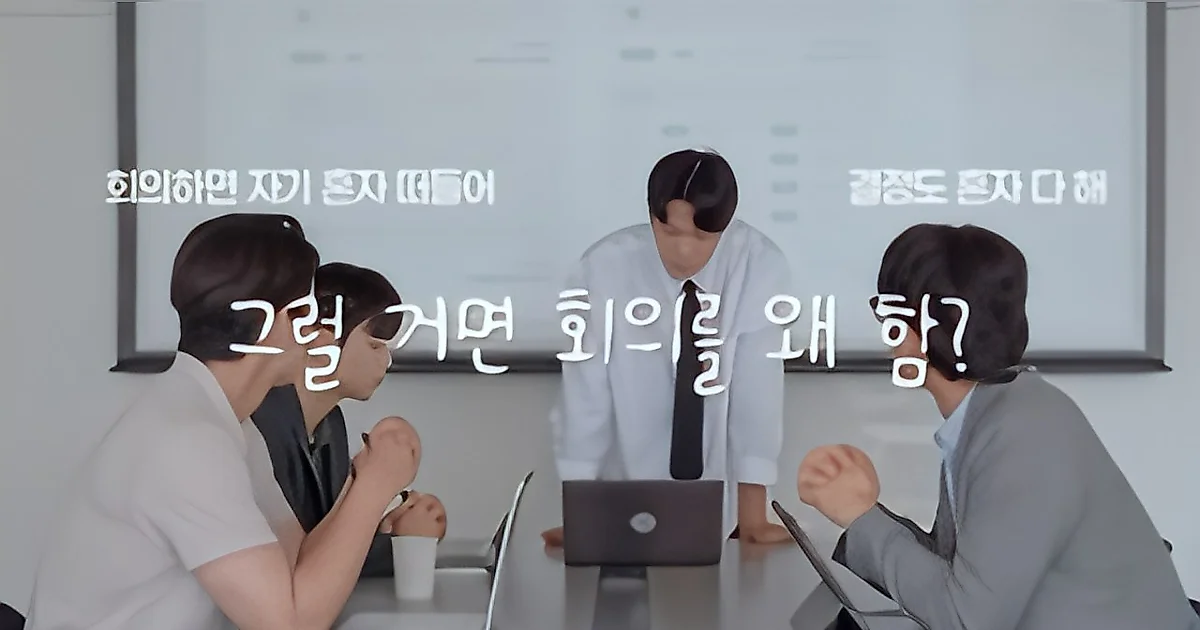
Main broadcasts of Knowledge Channel e from September 21 to September 23
"The common sense we knew is being overturned!" EBS presents an interesting intellectual exploration spanning science, society, and psychology. [Science] If space debris falls from the sky, who is responsible and who should provide compensation? [Society] The power of love that moves the world, in the name of 'fandom'. [Psychology] All of us living in relationships are power holders; what is dignified power?
*Broadcast Schedule: September 21 (Mon) ~ September 23 (Wed) at 12:40 AM, EBS1
An interesting intellectual exploration that overturns the common sense of the past we firmly believed in and modern conventions is beginning. From September 21 (Mon) to September 23 (Wed), EBS will broadcast a diverse three-part planned series, covering discussions on responsibility and compensation for space debris falling from the sky, the fandom culture that moves the world with love, and what dignified power is.
"What Was That?" : September 21 (Mon) - If space debris falls from the sky, who is responsible and who should provide compensation?
In December 2024, a massive metal ring with a diameter of 2.5 meters and a weight of 500 kilograms fell into a small village in Kenya. Its identity was a 'separation ring' from a rocket that should have disappeared in the atmosphere. The Kenya Space Agency stated it was an 'unusual one-off incident,' but is this truly a problem that will end with just one accidental occurrence?
In fact, the number of space objects falling to Earth is rapidly increasing. 'Atmospheric reentry warnings' issued by the USSF have increased more than sevenfold in 10 years, from 110 cases in November 2015 to 820 cases in 2025. In 2024, an accident occurred where a metal fragment discarded from the International Space Station pierced the roof of a home in Florida, United States. But when damage occurs, where should we report it and whom should we hold accountable?
International conventions defining responsibility for damage caused by space objects were created half a century ago. However, now that the number of satellites has surged and the private space industry has grown rapidly, the landscape of space is completely different from that time. follows actual incidents surrounding 'space debris' falling from the sky to examine the issues of responsibility and compensation left to us.
"My Hobby Is Love" : September 22 (Tue) - The power of love that moves the world, in the name of 'fandom'
With a single movement of fans, music chart rankings fluctuate, and items used by stars sell out instantly. Fans willingly invest their time in stars and pour out their talents and money without hesitation. Now, the intense passion of fans has developed into a kind of fandom culture, evolving into an entity that exerts a greater influence on society beyond just individuals.
Tracing fandom culture back to The Beatles, it was an era where being fanatically enthusiastic about a star was everything, but now the form of fandom culture has changed. From passive recipients to active recipients. Those driving fandom culture do not hesitate to provide feedback to the subjects they consume and express their presence through various activities such as secondary creations.
In the era of 'fandom business' that creates fans in various fields beyond the entertainment industry, their influence has become so powerful that capturing fan hearts has become a key to success. will examine the evolving fandom culture and look into what kind of influence intense fan passion is having on society.
"The Taste of Power" : September 23 (Wed) - All of us living in relationships are power holders; what is dignified power?
"When I become a team leader, I must never act like that!" Even those who felt dissatisfied with the coercive attitude of their superiors often act similarly to their bosses when they ascend to a position of responsibility within an organization. This is because the power to move others—that is, 'power' arising within relationships—unconsciously dulls the heart to consider the situation or emotions of others. Why does power change a person's attitude so much?
According to psychological research, the moment a human being stands in a position to control others, they tend to become relatively free from social scrutiny, while their capacity for empathy and moral self-control tends to decrease sharply. This is the so-called 'paradox of power.' An environment where checks and criticisms disappear accelerates this imbalance, a problem that applies not only to massive power holders but also to everyone leading small organizations or relationships in daily life.
When those in positions of power realize that it is a responsibility rather than a mere privilege, power becomes a driving force for growing together rather than a tool to suppress others. In this broadcast, we look back at ourselves living with small and large powers within relationships and discover the true 'dignity of power' that is exerted when we respect others instead of controlling them.
*Related photos are available on the EBS institutional website (about.ebs.co.kr)-Cyber PR Office-Highlights, on the corresponding broadcast dates.
◆ At a Glance
· Publishing Institution : EBS
· Category : Knowledge Channel e
· Distribution : September 19
Source : EBS Press Release
The Korea Social Welfare Journal is striving to deliver press releases and welfare information more easily and accurately with the help of AI technology.


Comments 0