
EBS to air 10-part series on Jeong Yak-yong's governance guidebook
EBS will broadcast a new 10-part humanities series titled 'Admonitions on Governing the People' starting November 16, featuring an AI-recreated lecture by Jeong Yak-yong. The series explores the principles of governance written by the author during his exile in Gangjin.
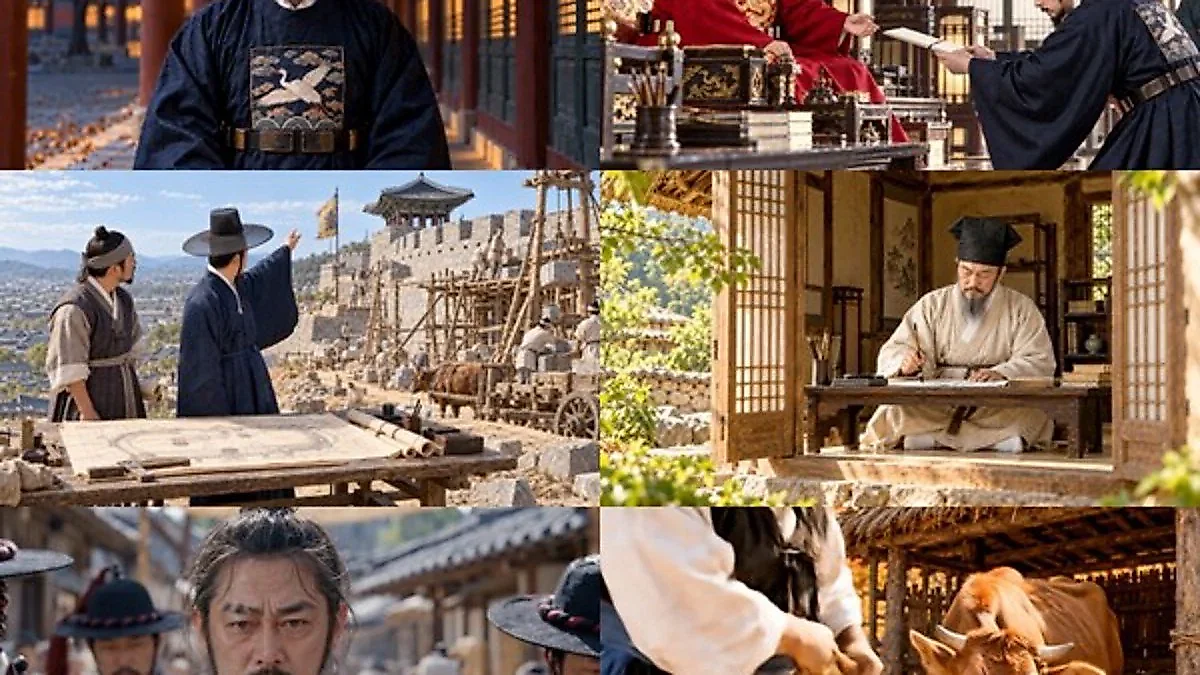
EBS will broadcast a 10-part series recreating Jeong Yak-yong through AI, detailing the 1818 guidebook 《Admonitions on Governing the People》. The series, airing on EBS 1TV from November 16 to November 27, 2026, explores the principles written by the former confidant during his exile in Gangjin.
How should those who must govern the people live? This is the question answered in a book written by a man who was in no position to govern. The paradox of a man who lost power providing the clearest vision of the principles of power is being vividly revived today through a new production by EBS.
EBS is presenting a new work in its grand humanities series, Jeong Yak-yong's 《Admonitions on Governing the People》(1818).
In February 1801, Jeong Yak-yong was arrested during the Catholic Persecution of 1801 and exiled to Janggi, Gyeongsang-do, and later to Gangjin, Jeolla-do. For Jeong, who had served as a confidant to King Jeongjo, designed Suwon Hwaseong Fortress, and witnessed the corruption of the Three Systems (samjeong) firsthand as a secret royal inspector, Gangjin was a land where he could do nothing. That winter, Jeong began to write in the back room of a tavern in Gangjin. A man unable to govern the people directly began to detail the principles and practical duties that a local official must uphold. Completed after 18 years, 《Admonitions on Governing the People》 is a guidebook that designs the daily life of a local magistrate through 12 chapters and 72 items, from taking office to leaving it.
The structure of 《Admonitions on Governing the People》 is simple: govern oneself with integrity (yulgi), serve public affairs correctly (bonggong), and serve the people like one's own children (aemin). Only after these are established can one regulate local clerks, collect taxes fairly, execute punishments cautiously, and provide relief during famines. Jeong's answer is clear: morality and professionalism are not separate. Without an upright heart, there is no practical skill, and without practical skill, integrity is hollow. Only a magistrate who possesses both can save the people. The cases presented in the book—such as the corruption of the Three Systems (Chapters 3, 7, and 8), the trickery of local clerks (Chapter 6), the grievances of criminal trials (Chapter 9), and relief during famines (Chapter 10)—all point toward this single question: Through what does a public official save the people? This question from 200 years ago returns to us at this very moment.
The series uses a first-person lecture format where the author is recreated by AI. The Jeong Yak-yong of the Gangjin exile—the man who wrote the principles of governance while in a position where he could not govern—speaks directly to today's viewers. The first lecture illuminates Jeong Yak-yong's life in a biographical format, and from the second to the tenth lecture, the core discussions of the 12 chapters of 《Admonitions on Governing the People》 are explored in depth by chapter. Baek Min-jeong, a professor of philosophy at The Catholic University of Korea, served as the supervisor.
The 10-part EBS series 'Admonitions on Governing the People' will be broadcast on EBS 1TV on weekdays at 12:05 AM from Monday, November 16, to Friday, November 27, 2026. Replays will be available on the EBS website.
Covers K-pop for KSW Journal, and also writes about Culture and K-Variety.

Comments 0
Comments are currently disabled.