
11 Korean Literary Works Reborn as 13 Dramas Using Generative AI
The program 〈EBS AI Literature Hall〉, which reinterprets Korean classical and modern literature using generative artificial intelligence (AI), will begin its first broadcast on October 16. The series will air 13 AI-based creative dramas based on 11 Korean literary works, such as Kim You-jung's "Spring, Spring" and "Camellia Flowers," every Friday at 1:55 PM on EBS 1TV.
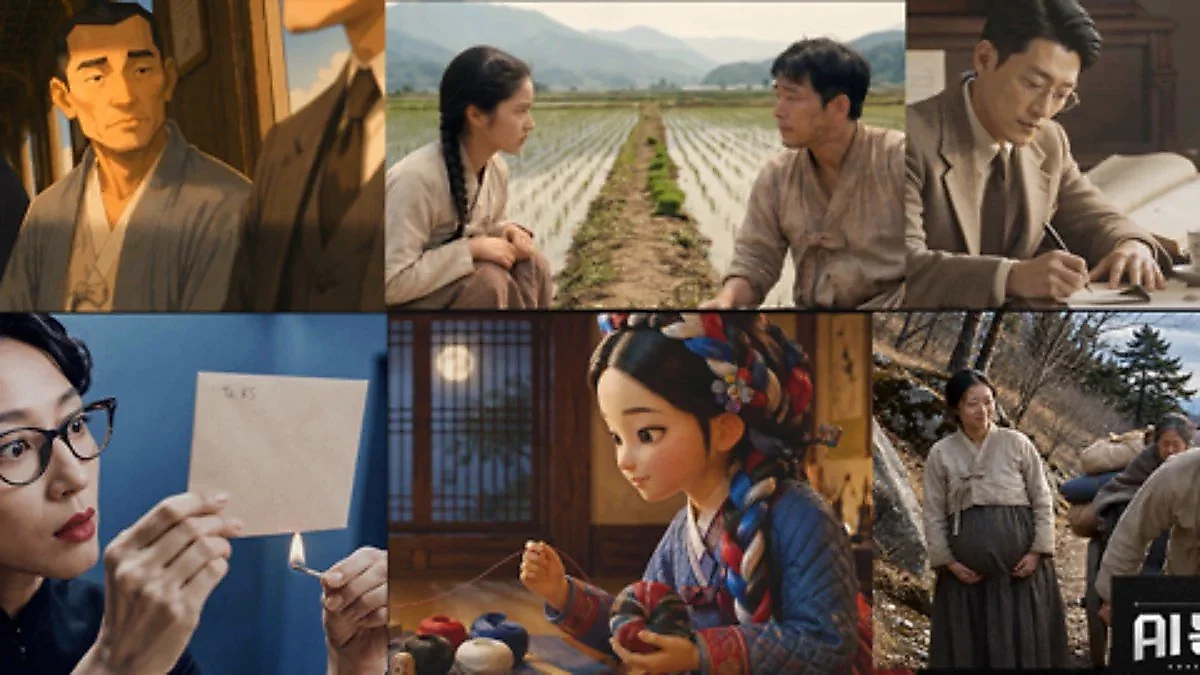
The program 〈EBS AI Literature Hall〉, which reinterprets Korean classical and modern literary works using generative artificial intelligence (AI), will begin its first broadcast on October 16. Based on 11 Korean literary works, including Kim You-jung's "Spring, Spring" and "Camellia Flowers," Hyun Jin-geon's "Inspector B and the Love Letter" and "Hometown," and Lee Hyo-seok's "Blade of Grass," 13 AI-based creative dramas will be broadcast every Friday at 1:55 PM on EBS 1TV. The first work is ‘The Gullible Man's Spring,’ based on "Spring, Spring."
According to EBS, the program unfolds works into video by adding new spaces, characters, and visual expressions based on the original stories and emotions. It also utilizes methods such as dramatizing the original narrative into a drama format, moving the setting to a different space, or having characters from different works meet within a single story. The selection of works focused on Korean literature that has been handled in educational settings, such as works included in textbooks and works related to the CSAT, and they were filmed after consulting relevant experts.
13 dramas produced based on 11 literary works
〈EBS AI Literature Hall〉 is a program where you meet familiar stories and characters of Korean literature again through dramas using generative AI. EBS has produced a total of 13 works based on 11 pieces ranging from classics to modern literature. Depending on the work, it either maintains the main story of the original while constructing new spaces, or reconstructs the original narrative into a more dramatic format. It attempts visualization without being limited to a single format, such as having characters from different works appear together in one story.
| Category | Scale |
|---|---|
| Original Korean Literature | 11 works |
| AI-based Creative Dramas | 13 works |
The list of works includes Kim You-jung's "Spring, Spring" and "Camellia Flowers," Hyun Jin-geon's "Inspector B and the Love Letter" and "Hometown," and Lee Hyo-seok's "Blade of Grass" and "The Buckwheat Season." Hyun Jin-geon's "A Society That Encourages Drinking," Jo Wi-han's "Choe Cheok jeon," Kang Gyeong-ae's "Salt," Choi Seo-hae's "Runaway," and the anonymous "The Quarrel of the Seven Friends of the Women's Quarters" will also be introduced on screen. EBS explained that these works are Korean literature that has been steadily encountered in educational settings, such as being included in textbooks or being used in the CSAT.
The program does not stop at merely reproducing the original; it applies different reinterpretation methods for each work. Instead of realistically reproducing the era and space of the story, it moves the setting to a place that seems to be the boundary between reality and unreality, or implements the landscapes in the literature through AI animation. EBS stated that the visualization was done after consulting relevant experts. The production direction of the program is to add new spaces and visual expressions while preserving the story and emotion of the original in each work.
From the humor of "Spring, Spring" to the bizarre space of "Inspector B and the Love Letter"
The first broadcast work, ‘The Gullible Man's Spring,’ is a creative drama based on Kim You-jung's short story "Spring, Spring." It centers on the story of a man who, despite being promised marriage, can hardly achieve his goal, and the characters surrounding him. It unfolds the relationship between the male and female protagonists surrounding marriage and the situations occurring in the process in a dramatic drama format, delivering the unique humor and wit of the original through new visual expressions.
The second work, ‘Secret,’ is based on Hyun Jin-geon's "Inspector B and the Love Letter." While maintaining the main story and character relationships of the original, instead of realistically reproducing the era and space of the time, the story was moved to a space that seems to be placed on the boundary between reality and unreality. Utilizing a space and character direction with a cold and restrained atmosphere, it visually expresses the inner self that Inspector B is hiding and the bizarre and ironic emotion of the work.
‘Secret’ implements a space and atmosphere where reality and imagination intersect using generative AI. While ‘The Gullible Man's Spring’ constitutes the character relationships and pleasant situations surrounding marriage into a drama, ‘Secret’ is a method of visualizing the emotion of the original through space and atmosphere. EBS stated that through such reconstructions, they allowed people to experience familiar works with new images and senses.
Following the first two works, ‘So Close, Yet Out of Reach,’ based on Lee Hyo-seok's "Blade of Grass," and ‘Where Are You From?’, based on Hyun Jin-geon's "Hometown," will also be broadcast. ‘So Close, Yet Out of Reach’ is set in the 1930s, when even love was not free, and unfolds the diverging emotions and relationships of characters under the constraints of the era into a drama. It reconstructs the space and atmosphere of the time with generative AI to move the characters and emotions of the novel into video.
Visualizing wandering during the Japanese colonial period and stories in classics
‘Where Are You From?’ is an AI animation based on Hyun Jin-geon's "Hometown." It reconstructs the landscapes of poverty, wandering, and loss that the Korean people had to experience during the Japanese colonial period through AI animation. It is introduced as a work that unfolds the historical background and the landscape within the work of "Hometown" into video. Along with ‘So Close, Yet Out of Reach’ which is broadcast earlier, it implements the characters and era of modern literature through AI-based video.
In addition, modern and contemporary works such as Kim You-jung's "Camellia Flowers," Lee Hyo-seok's "The Buckwheat Season," and Hyun Jin-geon's "A Society That Encourages Drinking" are included in the program. As for classical works, Jo Wi-han's "Choe Cheok jeon" and the anonymous "The Quarrel of the Seven Friends of the Women's Quarters" are on the list. Kang Gyeong-ae's "Salt" and Choi Seo-hae's "Runaway" are also targets for visualization. EBS explained that it covers both Korean classics and modern/contemporary literature, attempting different methods of visualization for each work.
The methods of visual adaptation for each original work encompass both dramas and animations. In "Spring, Spring," the relationships and humor surrounding marriage are unfolded as a dramatic drama, while "Inspector B and the Love Letter" is moved to a space where reality and unreality overlap. "Blade of Grass" depicts the relationships of characters under the constraints of the 1930s era, and "Hometown" reconstructs the poverty, wandering, and loss of the Korean people during the Japanese colonial period through AI animation. The remaining works also attempt to visualize Korean literature in various different ways.
The selection of works was centered on literature that has been steadily covered in educational settings. EBS stated that it consulted with relevant experts, including works included in textbooks and those featured in or linked to the CSAT (College Scholastic Ability Test). For each work, a single director takes the lead, managing the entire production process from planning to the completion of the video. While preserving the story and emotions of the original works, the production team implements characters, spaces, and scenes using generative AI.
Broadcasting until January 2027 using a single-director production method
"EBS AI Literature Hall" expands the production method of "EBS AI Short Drama Theater"—which was introduced in 2025 as the first generative AI single-director pilot by a domestic broadcaster—into a regular program. For each work, one director takes the center and leads the entire production from planning to the completion of the video. This method involves using generative AI as a creative tool to implement characters, spaces, and scenes, expanding the director's vision into video.
EBS stated that it is integrating generative AI technology with the expertise and creative experience accumulated in existing broadcast production. The four directors who directed and produced the program, Jeong Yeong-jae, Choe Ji-yeong, Gu Tae-rim, and Kim Jin-ho, said, "We hope this becomes an opportunity for teenagers to understand Korean literature more familiarly, and for middle-aged and older generations to meet familiar literary works again through the fun of new videos and dramas."
The program consists of a total of 13 episodes and will be broadcast every Friday at 1:55 PM on EBS 1TV from October 16, 2026, to January 8, 2027. The first episode is "The Gullible Man's Spring," based on "Spring, Spring," and the second work is "Secret," based on the original "Inspector B and the Love Letter." Subsequently, dramas and animations based on Korean literary works, including "So Close, Yet Out of Reach" and "Where Are You From?", will be presented.
After broadcasting, they can be rewatched on the EBS website. "EBS AI Literature Hall" will introduce 13 AI-based creative dramas made from 11 works of Korean classics and modern/contemporary literature to viewers every Friday from October 16 to January 8 of next year.
Covers K-pop for KSW Journal, and also writes about Culture and K-Variety.

Comments 0
Comments are currently disabled.