
EBS to broadcast 10 episodes of Dante's Divine Comedy every night at 12 AM starting September 21
EBS has selected Dante Alighieri's "Divine Comedy" as the thirteenth classic for its large-scale humanities project using AI technology…
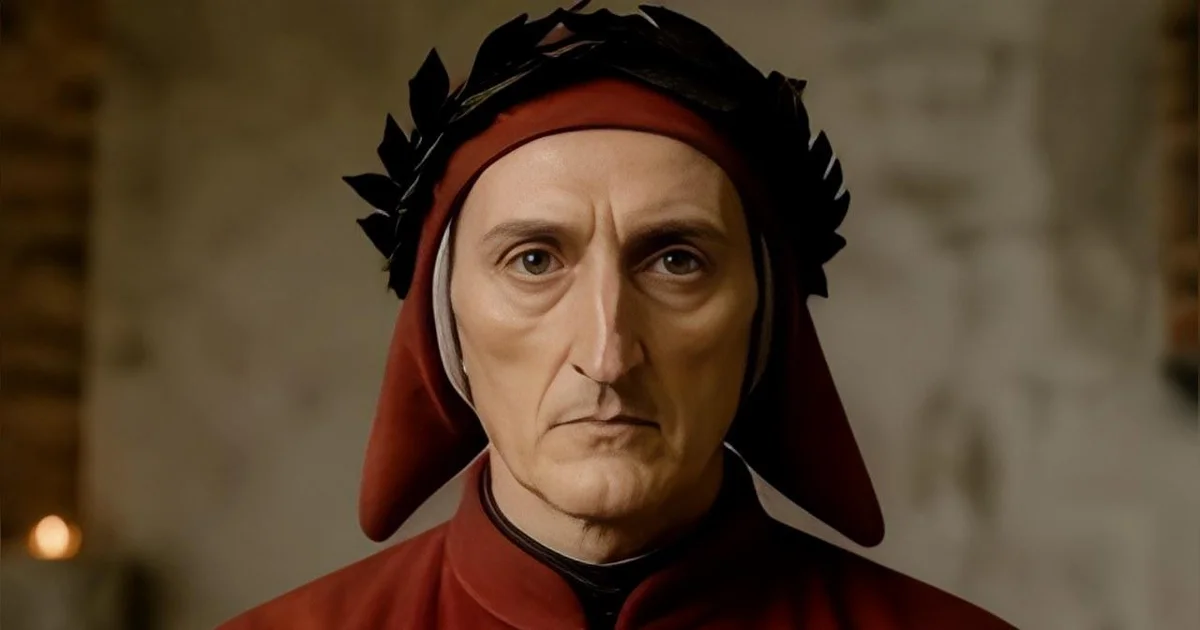
How does a lost human find the light again?
EBS, 'Divine Comedy' to be broadcast on EBS 1TV at 12:05 AM starting September 21
- The pinnacle of Western literature, completed in 1321, which continues to be reborn in paintings, sculptures, films, music, novels, and games even 700 years later - A single human soul's pilgrimage through three worlds: Hell, Purgatory, and Paradise - Why is fraud a heavier sin than violence, and why is the deepest part of Hell ice rather than fire? - Dante, at fifty-six in his final year, following a sentence of burning and 20 years of exile, lectures personally - Recommendation from author and translator Park Sang-jin, the translator of 《Divine Comedy》: “What is most prominent in Dante's 《Divine Comedy》 is compassion for humanity” - Supervised by author and translator Park Sang-jin (former professor of Italian at Busan University of Foreign Studies)
*Broadcast Schedule: Monday, September 21, 2026 ~ Friday, October 2, 2026, weekdays at 12:05 AM, EBS1
EBS has selected Dante Alighieri's 《Divine Comedy》 (La Divina Commedia, 1321) as the thirteenth classic for its large-scale humanities project utilizing AI technology, and it will be broadcast on EBS 1TV weekdays at 12:05 AM starting Monday, September 21.
The exile who held a pen instead of a sword
The series consists of 10 episodes, each 15 minutes long, airing one episode every day over two weeks. Author and translator Park Sang-jin (former professor of Italian at Busan University of Foreign Studies), who translated 《Divine Comedy》 into Korean, participated in the supervision to enhance academic rigor. 'Divine Comedy' poses the question to today's viewers across 700 years of time: 'How does a human wandering in darkness find the light again and reach salvation?'
If you step on the home soil again, you shall be burned to death
March 1302, Palace of the Podestà in Florence. A verdict was read in a trial held in absentia with the defendant's seat empty. Charges of embezzlement of public funds and abuse of power, confiscation of property, permanent exile, and a sentence that if he ever sets foot in Florence again, he will be burned at the stake. The name of the defendant is Dante Alighieri. He was a thirty-seven-year-old politician who served as a high-ranking official in Florence and a promising poet. This was orchestrated by his political enemies while he was in Rome as an envoy.
The poet, who had made the girl Beatrice, whom he met in the spring of his ninth year, his lifelong inspiration, became an exile with no place to return to overnight. He later inscribed in 《Divine Comedy》 the days he spent wandering from one city to another, relying on the kindness of unfamiliar nobles: how salty another's bread is, and how rugged the path is when climbing the stairs of another's house.
However, instead of picking up a sword against the political enemies who broke him, Dante picked up a pen. A grand epic where he becomes the protagonist and pilgrimages through Hell, Purgatory, and Paradise. Written in the Florentine vernacular rather than Latin, the scholarly language of the time, this work continued throughout his years of exile and was completed just before Dante passed away in 1321. The original title was simply 《Commedia》. It meant a story that begins terribly but ends in a good and beautiful way.
A pilgrimage of souls led by two Dantes
The 1st lecture opens with a prologue that follows Dante's life from the moment of the exile sentence to the writing of 《Divine Comedy》. From the 2nd lecture, the stage is Italy in 1321. At the end of nearly 20 years of exile, fifty-six-year-old Dante, who has just finished writing the last sentence of 《Divine Comedy》 under the patronage of Guido Novello da Polenta, the lord of Ravenna, turns the parchment and speaks directly to the viewers. And a few months later, he passes away.
There is another Dante within the lectures. It is the pilgrim Dante, aged thirty-five, who lost his way in a dark forest in the year 1300, in the middle of his life's journey. In the story told by the fifty-six-year-old poet, the thirty-five-year-old pilgrim passes through the gates of Hell under the guidance of the Roman poet Virgil, climbs the mountain of Purgatory for purification, and finally soars into the sky of light with Beatrice.
Seeing the stars again from the bottom of Hell
The afterlife Dante depicts stands upon the medieval worldview, but the questions the pilgrimage poses are for today. As author Park Sang-jin pointed out in his recommendation, Dante's position, having established an alternative to a God-centered civilization, overlaps with our current position where a human-centered civilization is shaking.
A sin heavier than violence, the act of breaking faith. The Hell designed by Dante becomes narrower as one descends, and the sins become heavier. Below the sin of failing to control desire lies the sin of violence, and below that, the sin of fraud and betrayal. While violence can be committed by beasts, fraud is the act of abusing the reason given only to humans to deceive others. And the deepest part of Hell is not flames, but a frozen lake. While anger, lust, and violence all contain heat, betrayal is a cold, frozen heart where both love and trust have vanished. In an era where sophisticated deception and the collapse of trust become daily news, the map of sin drawn by the poet 700 years ago remains sharp.
Every sin is an error of love. While climbing the mountain of Purgatory, Dante hears a principle that pierces through all seven circles from his teacher Virgil. Everything in the world moves by love, and sin arises when love is directed toward the wrong place, is insufficient, or overflows. If pride to stand above others, the heart to envy others' success, and the anger to seek revenge are love that has lost its direction, then a lukewarm love toward goodness becomes sloth, and love that overflows with wealth, food, and pleasure becomes greed, gluttony, and lust. Therefore, washing away sin is the act of correcting the direction of love. Marco, a man from Lombardy met on the same path, says not to blame the corruption of the world on the stars or fate. This is because humans were given the reason to distinguish good from evil and the free will to choose for themselves. The 'path of independent human salvation' mentioned in the recommendation opens here.
A book that only one who has lost could write. In the sky of Mars, Cacciaguida predicts exile to Dante while simultaneously entrusting him with a mission. To lay down all falsehoods and report everything he has seen to the world without omission. Dante asks himself in the lecture: If he had lived comfortably in Florence, could he have written 《Divine Comedy》? If he had not been driven out of his hometown and wandered, he would not have seen the world deeply, and if he had not known the pain of losing, he could not have sung of the sorrow of Hell or the joy of salvation. The pain that almost broke him ultimately led him to the world of light.
The Hell, Purgatory, and Paradise parts of 《Divine Comedy》 all end with the same word, 'stars'. What Dante faced at the final place of his pilgrimage was the love that moves the sun, the stars, and the entire sky. Anyone may suddenly find themselves standing in a dark forest one day in life, but the star that leads us even in the darkness is always shining. This is the final request left by the exile 700 years ago.
The 10 episodes of EBS 'Divine Comedy' will be broadcast on EBS 1TV weekdays at 12:05 AM from September 21 to October 2, and can be rewatched on the EBS website.
*Related photos are available on the EBS institutional website (about.ebs.co.kr)-Cyber PR Office-Highlights, on the corresponding broadcast date.
Attachment 1. Main contents of the 10 episodes of 《Divine Comedy》 Attachment 2. Major lineup for September-October 2026 Attachment 3. Introduction of EBS AI Content Advisory Committee and content supervisors Attachment 4. Recommendation from author Park Sang-jin
◆ At a Glance
· Publishing Institution: EBS
· Category: AI Classics: 100 Books That Changed History
· Distribution: September 18
Source: EBS Press Release
The Korea Social Welfare Journal is striving to deliver press releases and welfare information more easily and accurately with the help of AI technology.



Comments 0