
Northern Spain with Park Sung-jin: Daily Life of Festivals Met in León and Santiago
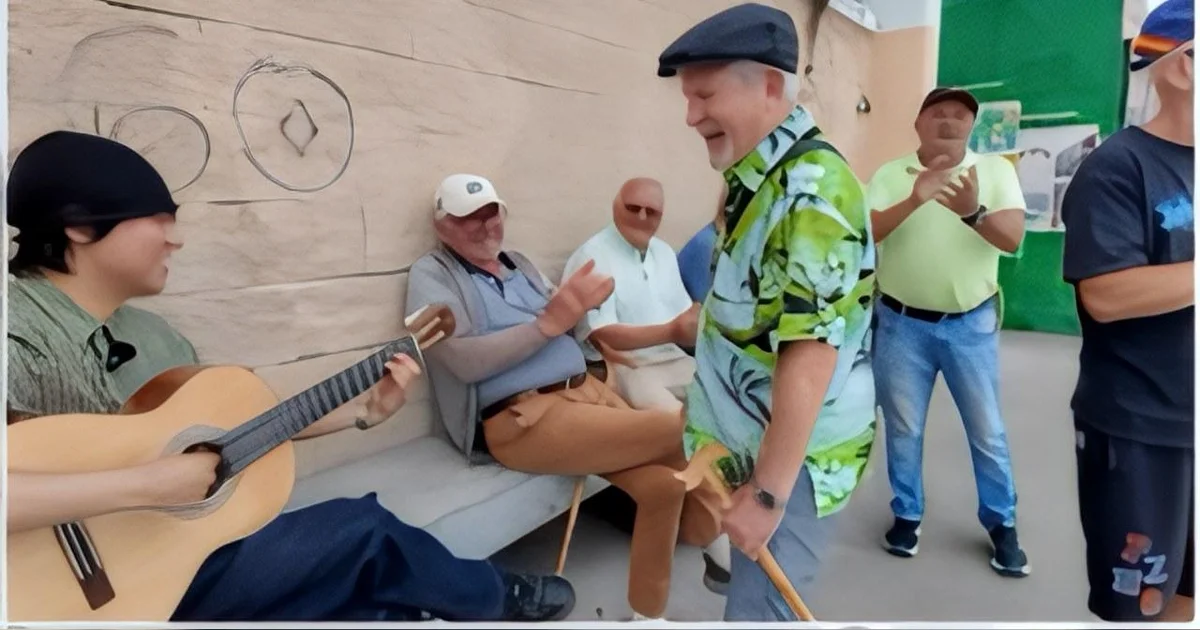
Flamenco guitarist Park Sung-jin travels through northern Spain to experience how festivals are deeply integrated into the daily lives of its people.
World Theme Travel: Life is Fiesta, Spain
Spain, a land of festivals (Fiesta), where daily life is a fiesta—a special journey through northern Spain!
Festivals where life and history breathe: Peñaranda de Duero, Herbón, and Catoira
Festivals permeated into daily life: León, Santiago, O Carballiño, A Illa de Arousa, and Gijón
Village festivals that draw you in: Comillas, Helecha, Ordizia, and Falces
The hidden flavors of festivals in the Basque Country: Bilbao, Burlada, Zugarramurdi, and Zumaia
An exciting journey taken with a flamenco guitarist!
* Broadcast Schedule: September 28 (Mon) – October 1 (Thu) at 8:40 PM, EBS1 * Curator: Park Sung-jin (Flamenco guitarist). Flamenco guitarist Park Sung-jin dives into Spain with a single guitar. As one of the country's leading flamenco guitarists, he has worked on various stages, including serving as the music director for the Seoul Metropolitan Theatre's and performing guitar for the musical . While practicing his guitar under the bridge of the Guadalmedina River in Málaga, he mingles with locals, absorbing the culture of Spain where festivals are part of daily life and speaking practical, life-oriented Spanish.
Part 1. All Roads Lead to Festivals - September 28 (Mon)
From a night where the entire village is dyed in candlelight for just one day a year, to a festival that revives the history of repelling Viking invasions from a thousand years ago. The festivals met in northern Spain break the boundaries between life and history, turning entire villages into massive stages. In the small medieval village of Peñaranda de Duero in the Provincia de Burgos, the Noche de Velas (Night of Candles) is held every year at the beginning of summer, where lights are turned off and tens of thousands of candles are lit. As candles are lit one by one along the quiet alleys and Plaza Mayor, and the melody of a flamenco guitar is added, the village transforms into a mysterious nocturnal stage. In the middle of the plaza stands the Rollo Jurisdiccional, a stone pillar symbolizing medieval judicial authority. The journey then heads to the small village of Herbón in Padrón, Galicia. The Herbón pepper, known to have begun cultivation in a monastery, is a representative specialty of the region today and is a special pepper that received the European Union's Protected Designation of Origin (DOP) in 2010. At the annual Festa do Pemento de Herbón, people immerse themselves in the excitement of the festival while tasting Herbón peppers, which, as the saying goes, "some are spicy and some are not (Uns Pican e Outros Non)," meaning the spiciness varies even among the same type of pepper. And in Catoira, at the mouth of the Río Ulla, the atmosphere changes completely. The Romaría Vikinga (Viking Pilgrimage) unfolds with the Torres de Oeste (Western Tower) as its stage. It is an occasion to revive the history of defending this land against the Vikings who invaded Galicia in the 9th and 10th centuries through today's festival. People boarding the Viking ship Úrsula to cross the river and land, clashing with those standing in their way, engage in a mock battle, and once the fray is over, they laugh and chat while pouring red wine into each other's helmets and horn cups. While the invaders of the past sought looting and conquest, what they seek in today's festival is not blood, but the red wine of the Río Ulla. They have transformed the memory of war into a festival of laughter and harmony. After the commotion, the festive mood continues by tasting the traditional Galician food, Lacón. The festival ultimately shows that life itself—eating, drinking, singing, and laughing together—is a fiesta.
Part 2. Santiago, the Festival Begins - September 29 (Tue)
The fiestas of northern Spain are not festivals that exist only on special days, but are landscapes of life that breathe within the daily lives of the people. In León, starting from the historic Catedral de León, one can tour Casa Botines designed by Antoni Gaudí. 1852-1926, stroll through Plaza Mayor where traditional markets are held, and encounter the old scenery of the city and the daily lives of its people. Led by a local, the destination is a cheese shop. There, one tastes cheese and wine served in a traditional wine pouch, the Bota de Vino, and encounters pride in food and warm hospitality toward guests. One can experience the deep flavors of León, from Cecina and Jamón, which contain Spain's traditional meat processing culture, to Lengua de Vaca Curada, which is salted and aged beef tongue. The journey continues to the Camino de Santiago. Passing through the Monte do Gozo in Santiago de Compostela, one arrives at the destination of the pilgrimage route, Praza do Obradoiro. In the plaza facing the cathedral, people who have finished the long pilgrimage embrace each other and cheer, sharing their joy. Afterwards, at the enclosed Monasterio de San Paio de Antealtares, nuns sell Tarta de Santiago and almond sweets through a revolving window called a Torno. The Torno, which allows goods to be exchanged without facing each other, is a unique way of connecting the life of an enclosed monastery, which does not have direct contact with the outside, to the outside world. And in the deep night, one meets the Sombra del Peregrino appearing in Praza da Quintana, welcoming a special night in Santiago. Heading back into the interior of Galicia, the Festa do Pulpo, held once a year in O Carballiño, awaits. Amidst the crowds filling the municipal park, the joyful performance of the street band Charanga echoes, adding to the heat of the festival. On wooden plates, large slices of Pulpo a Feira are served, and as music and food blend, the small inland town transforms into a massive festival ground. Moving toward the sea, another gastronomic fiesta unfolds on A Illa de Arousa. Passing the scenery where Batea, rafts for mussel farming, are lined up in the sea, one enjoys the flavors of the ocean, such as tortilla and paella, at the Festa Gastronómica do Mar. Finally, one heads to the coastal city of Gijón, where the representative cider (Sidra) culture of Asturias is alive. Passing a sculpture made of thousands of cider bottles, one directly experiences the traditional Escanciar, where glasses are held high to pour cider. Here, one enjoys the hearty flavors of Asturias, including Cachopo, which looks like a large tonkatsu, the traditional food Fabada asturiana made primarily with beans, the sausage Chorizo, and the Spanish-style blood sausage Morcilla.
Part 3. Village Festivals You Fall for the More You See - Wednesday, September 30
Starting from a city of architecture to a festival running with cows, from markets with hundreds of years of tradition to desert-like lands. Following northern Spain, fiestas unfold in every village, with each enjoying life in its own way. In Comillas, one meets El Capricho, which contains the unique imagination of the genius architect Antoni Gaudí. 1852-1926, in this place where sunflower-patterned tiles and unique windows catch the eye, there are also so-called Guillotine Windows that make a sound whenever they are opened or closed. One encounters special spaces while following the musical imagination embedded in the beautiful architecture. The next place is the small rural village of Helecha. Every year, local residents gather to continue traditions. The Concurso de Ordeño a Mano, a competition to see how quickly one can milk a dairy cow by hand, is held, and unlike in the past, special cows appear in today's festival. One shares the excitement of the festival with the villagers while sharing freshly baked Panceta. The next destination is Ordizia, where the traditions of the Basque Country are alive. In Plaza Nagusia, where the Ordiziako Azoka, which has continued its hundreds of years of history, is held every Wednesday, local agricultural and livestock products gather, and one encounters the daily life of the Basque Country through the market where people and goods flow. The journey continues to Falces in Navarre. In the village, the heat of the traditional festival burns brightly. In the bull-running festival, Encierro del Pilón, which unfolds along narrow and steep mountain slopes, cows and people run together. The downhill path, which stretches about 800m, is a dizzying course with a mountain slope on one side and a cliff on the other. This event, which originally started from the tradition of driving cows from the mountains down to the village, has developed into the current bull-running as young people began running in front of the cows. The traditional bull-running of Falces, where cows and people dash together along rough mountain paths, adds tension to the journey. The final destination is the vast land of Bardenas Reales in northeastern Spain. Entering between the unique terrain shaped by rain and wind, a landscape completely different from the green Spain unfolds. In its center, facing Castildetierra, which seems to rise in the middle of a desert, one meets another Spain created by the constantly changing nature.
Part 4. Basque, the Hidden Taste of Festivals - Thursday, October 1
We head to the Basque Country, where a unique culture lives and breathes in Northern Spain. Walking through the Casco Viejo, the old town of Bilbao that stretches along the Río Nervión, and through Las Siete Calles, which means "Seven Streets," we encounter Basque Cultura Vasca. After passing the Catedral de Santiago, which has endured since the Middle Ages, the gastronomy of Bilbao is not to be missed. From Bacalao al Pil-Pil, cod cooked with garlic and olive oil, to Chipirones en Su Tinta, small squid simmered in ink sauce, and Cazuelitas enjoyed in small bowls, to the representative Basque white wine Txakoli. In every alleyway, through the flavors and the joyful daily lives of the people, we encounter the fiestas of the Basque Country. Next, in Burlada, Navarre, we encounter Herri Kirolak, traditional Basque rural sports where strength and skill are contested. Known as the "Farmer's Olympics," movements originating from rural labor—such as cutting logs with axes and saws or running while carrying sacks—have become games and festivals enjoyed by the entire village today. In Amezketa y Ordizia, we meet Idiazabal, a sheep's milk cheese at the center of Basque pastoral culture. By following the lives of those who raise sheep and make cheese, we look into how Basque food is more than just sustenance, but a culture that carries on the local climate and traditions. Moving on to Zugarramurdi, old Basque folklore and mysterious stories await. Passing the Pottokaren Bidea trail, which features drawings of the Basque pony Pottoka, we mingle with villagers at the Zikiro Jate, a feast where lamb is grilled over charcoal. We enjoy the festival night sharing Calimocho, made by mixing red wine and cola, and visit Akelarre, steeped in legends of witches and sorcery, and Cueva de Akelarre, named the Cave of the Witches' Gathering. The moment we shout "Bikain," meaning "excellent" in Basque, while enjoying unlimited grilled lamb and Piperrada, a veal stew with red pepper, the Basque fiesta—where legend, food, and people harmonize—is complete. The final stop of the journey is Zumaia, a landscape sculpted by the sea and time. Standing on Playa de Itzurun, massive rock formations rise toward the sea, and the Flysch, where geological layers formed over tens of millions of years are revealed in layers, creates a magnificent spectacle. On the coast, which changes its appearance according to the high and low tides, we face a massive record of time created by nature. When people gather, it becomes a feast; when strength is contested, it becomes a game; and old stories become festivals. The fiestas encountered in the Basque Country are not events held only on special days, but a daily life that continues throughout all parts of living.
*Related photos can be found on the EBS institutional website (about.ebs.co.kr)-Cyber PR Office-Highlights, on the corresponding broadcast date.
◆ At a Glance
· Issuing Organization: EBS
· Category: World Theme Travel
· Distribution: September 27
Source: EBS Press Release
The Korea Social Welfare Journal is striving to deliver press releases and welfare information more easily and accurately with the help of AI technology.
Covers K-pop for KSW Journal, and also writes about Culture and K-Variety.
Comments 0
Comments are currently disabled.