
EBS to showcase Bolivian life in four-part travel series
EBS1's "World Theme Travel" will broadcast a four-part series titled "Bolivia, the Country Embracing Uyuni" starting October 26, following curator Park U-mul through the diverse landscapes and daily lives of Bolivia.
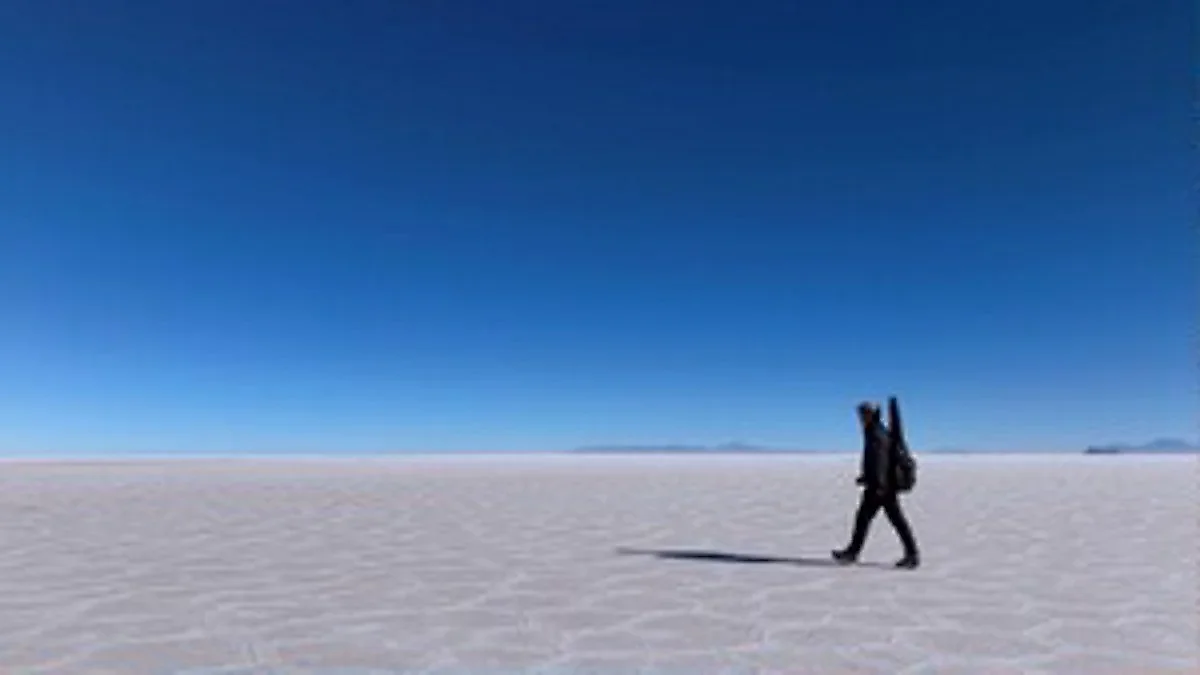
A four-part series titled "Bolivia, the Country Embracing Uyuni" will air on EBS1 from October 26 to 29. Curator Park U-mul will travel from the 10,000 km² Uyuni salt flat to the Amazon to explore local traditions, such as the Ch'utillos Festival inscribed on the UNESCO Intangible Cultural Heritage list in 2023.
EBS1's "World Theme Travel" will air a four-part series titled "Bolivia, the Country Embracing Uyuni" from October 26 to 29. Airing nightly at 8:40 PM, the journey begins in the world's largest salt flat, Uyuni, and travels through the silver mining city of Potosí, Yungas, Lake Titicaca, and Sucre, continuing to Cochabamba, the Amazon, and the administrative capital, La Paz. Park U-mul, a South American travel expert and performing artist, serves as the curator to introduce Bolivia's nature and the daily lives of its people. Having lived between South Korea and South America since 2006, Park will meet locals through guitar, song, and the traditional Andean flute, the quena. The broadcast will cover salt extraction, mining labor, border markets, life on the lake, local food, and festivals across Bolivia in four episodes.
People met at the Salar de Uyuni salt flat
The first broadcast begins on October 26 in Uyuni, located at an altitude of over 3,600 meters. The journey passes the Uyuni public clock tower, which has announced train times since 1930, to visit the Train Cemetery, where Park U-mul plays the guitar among rusted locomotives that once carried minerals instead of salt. In the Salar de Uyuni, which covers an area of more than 10,000 km², the program visits Ojos del Salar, known as the "eyes of the salt flat." Depending on the minerals held in the brine beneath the salt crust, this area displays different colors. The show also explores salt architecture, featuring hotels made entirely of salt—including walls and beds—that can last 20 years with a single renovation.
The program meets residents who make a living from salt in the salt extraction sites and the village of Colchani. Extracted salt is washed, dried in the wind and sun, and then finely processed with added iodine—a process designed for Bolivians who find it difficult to access seaweed due to the lack of an ocean. The Uyuni salt is described as having a sweet taste following its saltiness. In Tahua, at the foot of the Tunupa Volcano north of the salt flat, the show hears Aymara beliefs that the salt flat was created from the milk and tears of the goddess Tunupa, and walks with llamas drawn by whistling sounds. At sunset, the sky and land are reflected in the salt flat. At the Uyuni Central Market, viewers can taste llama jerky charque, llama head soup, and grilled llama ribs. The journey then heads to the Altiplano at 4:00 AM to pass wild vicuña families and reach the red Laguna Colorada, where James flamingos, rediscovered in 1957, decorate the lake.
The silver mining city of Potosí and the roads of Yungas
The October 27 broadcast leaves Uyuni for Potosí, situated at an altitude of approximately 4,000 meters. On the way, the program visits a roadside bakery operated by a mother and daughter to buy bread for the journey. This bakery, which produces about 800 loaves a day, makes bread by lightly coating flour dough with cheese and baking it in a wood-fired oven. Passing cars and trucks line up to buy the bread, which the program introduces as having a rustic shape and chewy texture. In Potosí, the journey passes the cathedral built in the 19th century and Plaza 6 de Agosto to visit the former social club, International. Through old photographs of noblewomen whose buttons and boot decorations were adorned with silver, the era of the city's silver mining is examined.
At the Cerro Rico Mine, where silver is extracted, the program observes ongoing mining operations. The tunnels reach temperatures of 35 to 40 degrees Celsius, and miners gain strength from coca leaves. The show also introduces the Ch'utillos Festival held every August. This festival, which blends Catholic faith with Andean indigenous traditions, was inscribed on the UNESCO Intangible Cultural Heritage of Humanity list in 2023. It features Negritos, representing African slaves from the colonial era, the folk dance Morenada, and Waka Waka, which satirizes bullfighting culture. The sound of the matraca spun by Morenada dancers evokes the chains of those dragged to the silver mines. The festival food, chancho a la cruz, consists of pork fixed to a cross-shaped frame and roasted for 12 hours, served with yahua. The journey continues along the "Death Road" in Yungas, visiting a cliffside path where a mother and children once walked during their childhood. In Tocaña, the history and culture of the Afro-Bolivian community, who settled while working in mines and farms, are examined. The program also visits mountain farms where coca and yucca grow.
The markets of Lake Titicaca and the tables of Sucre
On October 28, the journey reaches Lake Titicaca at an altitude of over 3,800 meters. Kasani, on the border of Bolivia and Peru, is a village that was originally an Aymara settlement split between the two countries. On "Borderless Day," residents of both nations cross without passports to trade goods. Peruvians travel to Bolivia to buy inexpensive groceries, while Bolivians cross into Peru to purchase manufactured goods like mattresses and swimming pools. Money changers, who exchange Peruvian soles for Bolivian bolivianos, are located near the border line. A Morenada performance is also held. Afterward, the group takes a bus to the Uros Islands in Peru to meet people who live by weaving totora reeds from the lake to create islands and houses. The sweet-tasting reeds are also tasted.
At Lake Titicaca, the program meets fishermen who catch and farm trout. The show captures a meal of freshly caught fried trout, boiled potatoes, and salsa made with a stone mortar, including a scene where a fisherman's family eats kimchi placed on top of potatoes provided by Park U-mul. The journey continues to Sucre, the constitutional capital known as the "White City" due to its rows of white buildings. A local specialty found at the market is mondongo, a dish of pork simmered in red chili seasoning. The tropical fruit chirimoya is also tasted. The visit coincides with "Car-Free Day," when pedestrians fill the streets and a procession honoring the Virgin of Guadalupe takes place. A painting of the Virgin from 1601 is adorned with approximately 10,000 jewels donated by believers. The program also shows people offering flowers ahead of the feast of the Virgin's birth.
Food in Cochabamba and Villages in the Amazon
The October 29 broadcast begins in Cochabamba, home to the massive statue Cristo de la Concordia. In the nearby bread village of Arani, the program visits Mama Qonqachi Bakery, which has been baking bread for five generations. This bread, which means "bread that makes you forget your mother," is a large cheese bread that a groom presents to the bride's family with love and sincerity. Sisters pound and flatten the dough, topping it generously with cheese before baking. The older sister mentions that she received a piece of bread over 2 meters long from her husband when she got married. On the day the bakers head to the cathedral with the bread, viewers witness a mass where the bread is offered and local residents sharing it. On September 14, an event in Cochabamba is held to commemorate the 1810 independence uprising. The program explores a scene where Catholic rituals and indigenous Andes faiths serving the sun and earth coexist, as well as a night market.
At the night market, tastes include silpancho, which features fried beef topped with rice, potatoes, and a fried egg; pique macho, containing meat, sausage, and French fries; and anticucho, beef heart skewers. At a local family's weekend farm, they prepare pampaqu, a traditional dish where chicken, pork, and vegetables are buried in the ground and cooked using the heat of stones warmed by a wood fire. They pick beans, make salsa, and set the table with family. In an Amazon River village, following a professor researching cacao, the program meets children eating cacao pods as snacks. The narrator climbs trees with the children to pick fruit and tastes Amazon chili. At a meal consisting of fish caught from the river and boiled yucca, villagers gather to sing along to guitar melodies. The final journey leads to the administrative capital La Paz and the highland city of El Alto. Taking a cable car, they ascend to the El Alto traditional market at an altitude of over 4,000 meters above sea level, witnessing the sight of people inserting banknotes into the hair of those celebrating birthdays. Park U-mul plays celebratory songs with a harmonica and guitar and talks with a merchant at a soccer goods store.
EBS1 will broadcast "Bolivia, a Country Embracing Uyuni" every evening at 8:40 PM for four days, from Monday, October 26, to Thursday, October 29. The itinerary consists of traveling through Uyuni, Potosí, Lake Titicaca, Sucre, Cochabamba, and the Amazon River, finally reaching La Paz.
Covers K-pop for KSW Journal, and also writes about Culture and K-Variety.
Comments 0
Comments are currently disabled.