
EBS special series to showcase regional autumn rice cakes
A five-part special of EBS1's 'Journey Through Korea' titled "What a Treat" will feature various regional rice cakes made from seasonal ingredients like chestnuts, pumpkins, and seaweed. The series, airing from October 26 to 30, explores the lives of people across South Korea who craft these traditional treats.
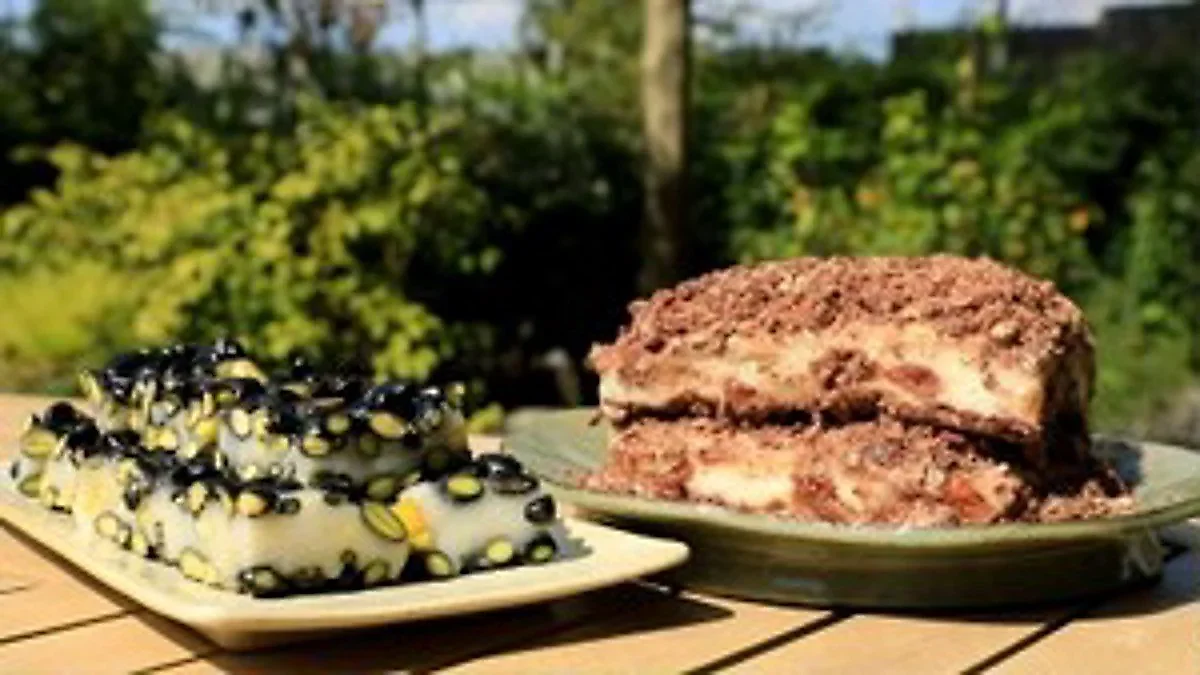
EBS1's 'Journey Through Korea' will air a five-part special titled "What a Treat" from October 26 to 30, featuring regional rice cakes made with autumn harvests such as chestnuts, acorns, and pumpkins. The series will visit locations including Ganghwado Island, Buyeo, and Yeosu to introduce various rice cake varieties and the people who make them.
As new rice, beans, red beans, sesame seeds, and chestnuts ripen this autumn, EBS1's 'Journey Through Korea' will broadcast stories of rice cakes and the people associated with them across the country. The special series, titled "What a Treat," will air on weekdays at 9:35 PM from October 26 to 30, introducing a rice cake shop run by siblings on Ganghwado Island, temple offerings at mountain hermitages, home-made rice cakes in Buyeo, pumpkin rice cakes in Yeosu, and unique regional varieties from Geumsan and Busan.
| Episode | Air Date | Main Content |
|---|---|---|
| Part 1 | October 26 | The six siblings' rice cake shop in Ganghwa |
| Part 2 | October 27 | Acorn rice cakes and offerings at a mountain temple |
| Part 3 | October 28 | Autumn home-made rice cakes in Buyeo |
| Part 4 | October 29 | Pumpkin rice cake in Yeosu |
| Part 5 | October 30 | Chubu perilla leaf rice cake and seaweed rice cakes |
The six siblings' rice cake shop in Ganghwa and temple offerings
The first episode visits six of the seven siblings in the Park family on Ganghwado Island who make rice cakes. The third sibling, Park Geum-seok, was the first to start the business, and his siblings later joined him, with the family currently operating three different rice cake shops. Although raised in the same house, the siblings have different methods and philosophies regarding rice cake making. Park Geum-seok, who runs a mill, continues to develop new recipes; the fourth sibling, Geum-sun, prepares nearly 50 different types of rice cakes daily; and the sixth sibling, Sun-seok, uses local ingredients from Ganghwa to create regional specialties.
Seeking to move beyond common recipes, Park Geum-seok developed a bright red garae-tteok containing spicy chili peppers and brought it to Geum-sun's shop. The program captures the siblings tasting and evaluating these new creations. Following Park Geum-seok's suggestion to use local specialties, Sun-seok created sagebrush rice cake with medicinal mugwort and sweet potato rice cake. The episode introduces the various ways the siblings craft Ganghwa rice cakes through their stories of continuous challenge despite multiple failures during the development process.
The second episode features rice cakes from Beomeosa Temple at the foot of Geumjeongsan Mountain in Busan and Mitaam Hermitage at the foot of Hambaksan Mountain in Eumseong, Chungbuk. Daeseongam Hermitage, located near the summit of Beomeosa Temple, is a hermitage that Seonggong has protected for over 50 years. This past July, Seonggong served Korean temple food to members of the World Heritage Committee at a temple food banquet hosted by Beomeosa Temple. As autumn arrives, Seonggong ventures outside the hermitage with young monks to gather acorns to make rice cakes, ensuring they take only as much as nature can spare. He passes on the art of making rice cakes to the young monks while reminiscing about pounding acorns with a traditional stone mill alongside elder monks.
At Mitaam Hermitage, Unseong has practiced asceticism alone for nearly 20 years. Having grown crops and prepared temple food personally, the monk prepares mugwort rice cake dough using self-harvested mugwort and makes mugwort soybean songpyeon using black soybeans. The mugwort rice cake is made by kneading the dough thoroughly, while the mugwort soybean songpyeon is shaped into bite-sized pieces before steaming.
Autumn home-made rice cakes in Buyeo and pumpkin rice cake in Yeosu
The protagonist of the third episode, Seo Yeong-ja, moved to Buyeo—a place with no prior connections—after her husband retired, seeking fresh air and clean water. Known for her culinary skills, she used to prepare meals and snacks for her children at home when they were young. After her children became independent, she began sending videos of her recipes via messenger whenever they asked for them. This led to her starting a second life as a cooking YouTuber. The family has long gathered to make and eat rice cakes, and this time, they make chestnut black soybean rice cake and dried persimmon siru-tteok using autumn ingredients.
To obtain the Buyeo chestnuts needed for the ingredients, Seo Yeong-ja and her daughter, Ha-gyeong, visit a chestnut farm. The chestnut black soybean rice cake is made by kneading steamed chestnuts into glutinous rice, while the dried persimmon siru-tteok features dried persimmons, grown and dried in the front yard, inside a cake that resembles red bean siru-tteok. Seo Yeong-ja demonstrates how easy it is to make rice cakes at home by steaming the two varieties, and the family gathers to taste the finished products. The broadcast captures the process of preparing ingredients, kneading the rice cakes, and the family eating together.
The fourth episode introduces the pumpkin siru-tteok made by Kim Deok-gi, who has operated a rice cake shop in the Yeosu Seosijang market for over 40 years. The pumpkin siru-tteok, which he began making when he first opened the shop, has gained a reputation through word-of-mouth, drawing customers to the market stall. Kim Deok-gi makes the rice cakes by adding his own secret touch to pumpkins grown in Yeosu. The program also shows him slicing tasting portions of rice cake for customers visiting the market throughout the day.
Kim Deok-gi's son, Jeong Seung-hun, has been working at the shop to help his mother since last year. Through this, he has learned about his mother's daily routine of waking up at 2:00 AM to run the shop and is learning the flavors she has maintained for so long. The pumpkin siru-tteok carries memories of Kim Deok-gi's mother. The broadcast conveys the process of making rice cakes with Yeosu pumpkins and the story of the shop being passed from mother to son.
Regional rice cakes made with perilla leaves and seaweed
The final fifth episode introduces rice cakes that expand their ingredients to capture the flavors of the sea and the fields. Son Ok-sun, who farms perilla leaves in Chubu-myeon, Geumsan, Chungnam, began farming following her parents-in-law, who belong to a generation that started perilla farming early on. Captivated by the plant, she began using it as an ingredient for rice cakes.
Because the scent of perilla leaves tends to linger in the machinery, mill operators were often reluctant to make such rice cakes. Son Ok-sun continued her development process, discarding hundreds of boxes of perilla leaves before successfully completing the Chubu perilla leaf rice cake. It has now become a Geumsan specialty sought after by customers from across the country. Son Ok-sun also makes rice cake soup using the perilla leaf rice cakes. A rice cake soup made by adding perilla seeds to the perilla leaf rice cake is another dish introduced in the program.
Kim Hoe-jun, who operates a rice cake shop in Gijang, Busan, makes four types of seaweed rice cakes using hijiki, kelp, kossiraegi, and mozaban. After moving in with his wife, Lee Gyeong-suk, who operated a rice cake shop in Gyeongju, to learn the craft, he returned to his hometown of Busan to open his own shop. He decided to make rice cakes using seaweed available from the nearby ocean, but initially struggled with the fishy smell and mucilage characteristic of seaweed. The program's introduction noted that after multiple attempts, the four types of rice cakes he completed are now so popular that they are difficult to keep in stock.
The "What a Treat" special of EBS1's 'Journey Through Korea' will air on weekdays at 9:35 PM from October 26 to 30. Over five episodes, it will tell the stories of regional ingredients and the people who make them, ranging from the new rice cakes of the Ganghwa siblings to acorn and mugwort rice cakes from mountain temples, chestnuts and dried persimmons from Buyeo, pumpkins from Yeosu, perilla leaves from Geumsan, and seaweed from Busan.
Covers K-pop for KSW Journal, and also writes about Culture and K-Variety.
Comments 0
Comments are currently disabled.