
From Dawn Markets to Glass Bottle Houses… EBS Captures the Daily Life of Vietnam
EBS1's "World Theme Travel" will broadcast a four-part series titled "Vietnam's Amazing Everyday Life" from October 12 to 15. The series follows Vietnamese translator Yoo Gi-tae as he explores diverse local traditions, from dawn markets in Da Nang to bamboo waterwheels in Pu Luong and glass bottle houses in Cam Thanh Village.
The scenery of an ordinary day for Vietnamese people becomes a strange and special experience for travelers. EBS1's "World Theme Travel" will broadcast "Vietnam's Amazing Everyday Life" for four days from October 12 to 15. It will sequentially visit the Tam Tien Market in Da Nang, which opens only at dawn, centuries-old vegetable villages, bamboo waterwheels and native ducks in Pu Luong, traditional fish traps and soy sauce manufacturing, houses built with glass bottles, basket boat acrobatics, and the production site of Cao Lau noodles. Vietnamese translator Yoo Gi-tae acts as a curator to examine the local lifestyles and the skills passed down within them.
The broadcast consists of four episodes, ranging from daily life in markets and rural areas to food and handicrafts. Part 1 follows the waterways to visit Tam Tien and Tra Que Village, while Part 2 explores the villages and waterfalls of the mountainous Pu Luong region. In Part 3, they meet artisans making fish traps, a family brewing Tuong Ben, and residents building glass bottle houses. The final episode captures the basket boats of Hoi An, the fermented meat Nem Chua, a couple catching clams in the river, and the hands of an artisan making Cao Lau noodles.
Daily Life of Water Following the Dawn Sea and Vegetable Fields
Part 1, "The Goblin Market of Tam Tien," broadcasting on October 12, begins with the Tam Tien Market held at dawn on the beach of Da Nang. The market opens only during the season permitted by the sea, and from 4:00 AM, fresh seafood and the daily lives of merchants unfold. On days when the water is too shallow for fishing boats to reach the shore, basket boats carry the seafood. The role of the basket boats, moving catches back and forth between the sea and land, is also introduced. The original text states that fishing is only possible for half the year in this sea.
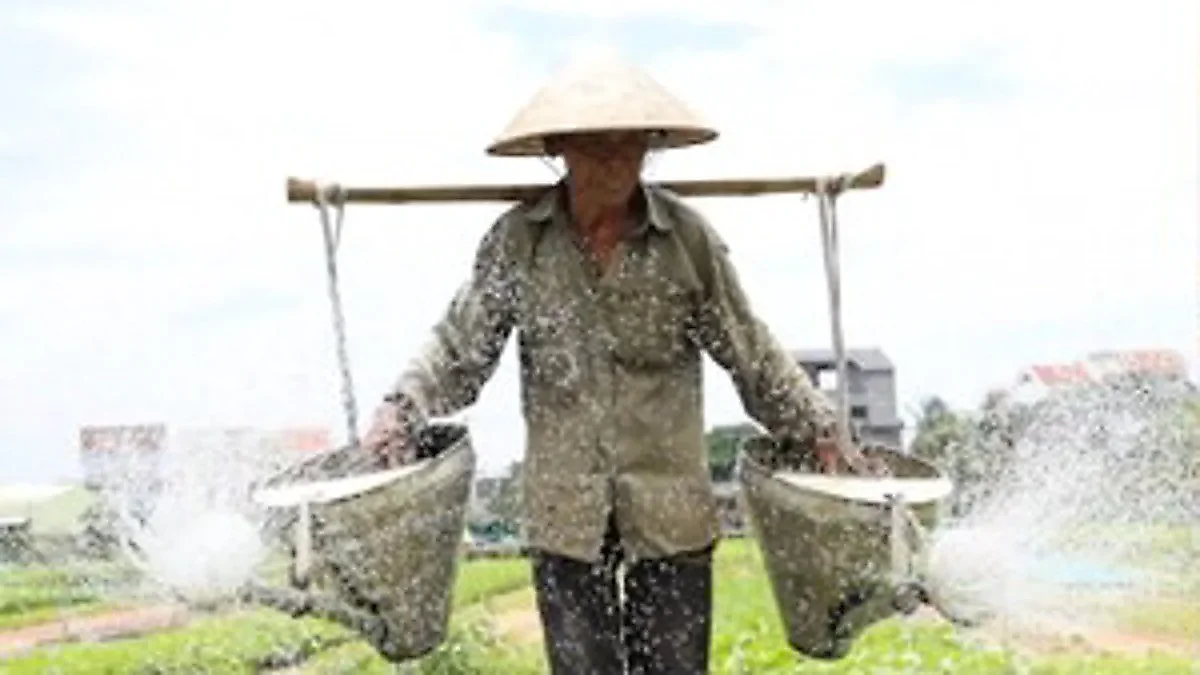
The program points out that even if a traveler visiting the market buys fresh seafood, it is difficult to eat without a cooking space, and follows the method of making Banh Xeo using squid purchased in Tam Tien. Wi, introduced as a market ambassador, guides how to enjoy the market. The next visit is to Tra Que Village, where vegetable fields preserving long traditions stretch out. Farmers spray water on the fields in the morning and evening using large water poles. Because the water sprays in all directions whenever the water pole is rotated, they are called "human sprinklers." Green moss also clings to the furrows of the fields. The broadcast explains this is to provide nutrients to the sandy soil.
Pu Luong with Waterwheels and Native Ducks
Part 2, "Pu Luong, a Paradise Meeting Water," broadcasting on October 13, visits Pu Luong near Hanoi. This region, where terraced rice paddies continue along the foothills of limestone karst mountains, was designated as a nature reserve in 1999 for biodiversity conservation. As its outstanding scenery became known, it gained attention as a trekking destination since the 2010s, and cafes overlooking the vast rice paddies are introduced as popular spots. The broadcast follows the local residents' lives along with the natural scenery of Pu Luong.
In Ban Cong Village, a massive waterwheel that has continued for 100 years rotates. It is a facility built by ancestors to pull water flowing lower than the ground up to the rice paddies. The waterwheel, made of bamboo and without using nails, can be repaired if it breaks. In the upper village, they meet Tai ethnic farmer Ha Van Trong and tour traditional stilt houses built above the ground. The houses have many windows to avoid the heat, and the floors are made of split bamboo to allow wind to pass through. They then play traditional spinning tops with villagers in the yard and enjoy playing in the water at Hieu Waterfall, a famous spot in Pu Luong.
Another specialty of this region is the Co Lung duck. It is a native duck named after the Co Lung region, characterized by a thick, short neck and a green head on the male. It is introduced as a precious duck that is two to three times more expensive than ordinary ducks. During the day, they are released into rivers or rice paddies to find food on their own. The owner is also shown searching for the "treasures" left behind by the ducks. Following the waterwheel and waterfall trip, the broadcast captures the appearance of the ducks, their rearing methods, and the daily life of the village farmer.
Fish Trap Artisans, Soy Sauce Jars, and Glass Bottle Houses
Part 3, "Tales of Extraordinary Life Masters," broadcasting on October 14, meets an artisan making fish traps on the paddy paths of Thu Sy Village in Hung Yen Province. The fish traps, which the grandfather carries hanging on a bicycle, are introduced as numbering 200 and weighing about 100kg. Following a scene of pulling the bicycle directly, they examine the fish traps placed inside and outside the house. Among them, the traditional long cylindrical fish trap takes center stage. They learn how to handle bamboo from the artisan and check if fish have been caught by taking out the fish traps placed in the paddy in advance.
Next, they visit a house in Ban Yen Nhan Village that makes the village specialty, Tuong Ben. Behind the house, many soy sauce jars are lined up. The broadcast introduces the manufacturing process that has continued for four generations. Beans are roasted, mold is made with glutinous rice, and then it is put into jars to ferment. It is said that even if it rains or snows during the fermentation process, the lids of the jars must be opened and stirred. Finally, they visit the glass bottle house being built by Linh in Cam Thanh Village. There are about 8,000 glass bottles used to build the house. On the second floor, the bottles receive light and create colors, and glass bottles are also placed on the rooftop. The house is introduced as being under construction at the time of filming.
Skills in the Fingertips Contained in Boats and Food
Part 4, "The Taste is Amazing!", broadcasting on October 15, opens with a basket boat experience in Hoi An. Following the music heard while touring the forest, acrobatics of spinning basket boats like spinning tops unfold. The people skillfully handling the boats are former fishermen who worked in the sea and rivers. The curator also challenges rowing, but experiences a situation where the boat does not move as intended and bumps into other boats. Next, they examine the identity of the food wrapped in banana leaves and hung over a brazier. It is Nem Chua, a traditional Vietnamese fermented meat made by fermenting rather than cooking with fire. Phai, who has been making Nem Chua since childhood, and her mother are shown picking banana leaves and preparing ingredients.
In the Tra Khuc River, they follow the work of a couple who raised their children while catching clams. The wife scrapes the riverbed with a "cai nhau" to pick out clams, and the husband catches clams in his own way. The broadcast captures the two catching clams in different places and checks who caught more that day. Next, they visit the production site of Cao Lau, a central region noodle, tasted at the Hoi An market. A grandmother making Cao Lau noodles for five generations continues the work of kneading, steaming, and kneading again. It captures the process of staying up all night to make the noodles and taking the finished noodles to the market.
Curator Yoo Gi-tae majored in Vietnamese at Hankuk University of Foreign Studies and University of Social Sciences and Humanities, Vietnam National University Ho Chi Minh City, and is a Vietnamese instructor with over 20 years of experience. He has published Vietnamese learning books and currently operates a specialized Vietnamese academy. He is introduced as an exploratory traveler who has traveled to about 20 small cities in Vietnam to find local stories. "World Theme Travel: Vietnam's Amazing Everyday Life" will be broadcast every day at 8:40 PM on EBS1 from October 12 to 15.
Covers K-pop for KSW Journal, and also writes about Culture and K-Variety.
Comments 0
Comments are currently disabled.