
Five Autumn Dining Tables Found on Foot
EBS1's "Korean Travelogue: A Food Journey on Foot" will air from October 12 to 16, following journeys to five different locations to discover meals found through physical effort rather than ratings or photos. The series visits blue crab fishing boats off Jindo, the Suncheon five-day market, a mountain temple in Hongcheon, a guesthouse on Sinsido Island in the Gogunsan Islands, and the foot of Sobaeksan in Danyang.
EBS1’s ‘Korean Travelogue: A Food Journey on Foot’, which follows meals discovered through walking and physical effort instead of ratings and photos, will be broadcast on weekdays at 9:35 PM from October 12 to 16. It sequentially visits blue crab fishing boats off the coast of Jindo, the Suncheon five-day market, a mountain temple in Hongcheon, Gangwon-do, a guesthouse on Sinsido in the waters off Gunsan, and the foot of Sobaeksan in Danyang, Chungbuk. The five-part journey captures everything from sailors traveling the sea all night for fishing to mothers preparing stalls for market day, monks preparing offerings from the mountains and fields, families visiting island dining tables, and riders gathered on bikes.
The program introduces food encountered by guests moving their own feet, and the daily lives of people who put in physical effort to obtain ingredients and set the table. Part 1 covers the fishing of Jindo sailors catching autumn blue crabs and soy sauce marinated blue crabs; Part 2 covers the preparations for the Seungju Araetjang Market day in Suncheon. In Part 3, an autumn offering prepared by three monks at Daewonsa Temple appears, and Part 4 follows a meal and an overnight stay at a guesthouse on Sinsido. In the final Part 5, bikers riding through the mountain passes of Sobaeksan eat garden vegetables and freshwater spicy fish stew.
Jindo Blue Crab Fishing Pulling Traps All Night
The first broadcast covers the autumn blue crab fishing off the coast of Jindo. Jindo is a representative production area accounting for about 40% of South Korea's blue crab production. In autumn, when male blue crabs with plump meat are caught, the ports and the sea become busy. In the sea two hours away from Seomang Port by boat, Captain Kim Yeong-seo's boat, with 45 years of experience, is fishing. The sailors do not come ashore until the wind stops the fishing.
Blue crabs are introduced as nocturnal fish. The sailors spend the night circling 14 fishing grounds, throwing thousands of traps into the sea and pulling them back up. The steps of the sailors moving within the narrow boat reach 20,000 steps a day. The program follows the fishing process of repeatedly setting and pulling up traps and the day continuing on the boat. After fishing, a crab party is held on the boat, and at a restaurant on land, soy sauce marinated blue crabs are aged with the handmade taste of a mother. It captures the process of autumn blue crabs caught from the sea being served on tables on boats and in restaurants.
The center of the story is not just the blue crabs, but the lives of the sailors who continue fishing. The schedule is introduced, showing the boat staying in the sea two hours away from Seomang Port and not returning to land until fishing stops due to wind. They circle 14 fishing grounds in a day, and the number of traps reaches thousands. Sailors move on the narrow boat to catch blue crabs, and after finishing fishing, they eat crabs on the boat. Subsequently, soy sauce marinated blue crabs are placed on the table at the restaurant. Part 1, ‘What is a Blue Crab Anyway’, will be broadcast on Monday, October 12, at 9:35 PM.
Suncheon Mothers Moving from the Day Before Market Day
Part 2 shines a light on Park Hui-eup's mother and the Araetjang Market in Seungju, Suncheon. For Park Hui-eup's mother, market day does not begin only on the day the market is held. On the day before, she goes up to the field using a sickle as a cane to dig bellflower roots, and harvests and prepares colocasia stalks and sweet potato vines all night. For about 40 years since her youngest son was three years old, she has earned money by selling goods at Araetjang Market to raise her children. The work of harvesting and trimming agricultural products to be put out at the market continues from before the market day.
Even at the empty Araetjang Market the day before the market, merchants prepare for the next day. A pancake shop frying Alaska pollock head pancakes and sisters running a red bean porridge shop for two generations prepare for business. The trimming and preparation processes of the pancake shop and red bean porridge shop ahead of the market day are also captured in the broadcast. The appearance of Park Hui-eup's mother and the merchants who have protected the market, moving to welcome the market day, leads to the ingredients harvested from the fields and the preparations of restaurants within the market. It follows the schedule of these people continuing their respective tasks in time for the market day.
At dawn on market day, the bellflower roots brought by Park Hui-eup's mother become ingredients for seasoned dishes at the restaurant right in front. Friends who have protected the market together for over 40 years share a bowl of delivered red bean porridge. The program ties together the process of digging bellflower roots in the field and preparing wild greens, and the work of preparing pancakes and red bean porridge at the market into a single day's flow. While introducing the work Park Hui-eup's mother has done ahead of the market day, it shows the meals of the market people and the market food together. ‘Mother Goes to the Market Again Today’ will be broadcast on Tuesday, October 13.
Autumn Offering Prepared at a Mountain Temple in Hongcheon
The stage for Part 3 is Daewonsa Temple, a small temple located in the mountains of Hongcheon, Gangwon-do. Monk Muyeo, known for temple travel videos, and Monk Jigyeon, a master of temple food, set out for Daewonsa Temple. There is Monk Wonjun, a fellow practitioner who rebuilt the collapsing temple alone. The broadcast content features the three monks staying together at the temple, preparing meals, and visiting mountains and valleys.
Monk Jigyeon said, “I don't know if I will be eating a meal or preparing one,” and the introductory materials say that intuition was correct. Guests who came to be fed end up picking chili peppers and deciding who will carry the old pumpkins through rock-paper-scissors, actually ending up preparing the table. The food consists of cauldron-cooked Gondre rice and Monk Jigyeon's style white kimchi. The white kimchi is flavored with chili seeds and ginger instead of green onions and garlic. The process of preparing ingredients at the temple and completing the food is captured in the offering table.
The three monks climb the mountain to pick wild peaches, and set up a natural tea room in the valley. A time to let go of the mind with the villagers and the sound of singing bowls follows. ‘Monk, What is Today's Offering?’ will be broadcast on Wednesday, October 14, at 9:35 PM.
Island Guesthouse and Sobaeksan Rider's Dining Table
Part 4 heads to Sinsido in the Gogunsan Islands off the coast of Gunsan. People gather at the guesthouse on the small island at every mealtime. The owner, Jeong Pan-ok, drives the boat when guests gather to pull up fish caught in the gill nets. The fish caught in the waters in front becomes sashimi on the guesthouse table. Thickly sliced sashimi and twelve side dishes prepared by his wife, Park Jeong-mi, are placed on one table.
On the dinner table, squid, cuttlefish, and long-arm octopus are added in turn to a broth boiled with garden pumpkins. The breakfast table, prepared from five in the morning, features soy sauce marinated blue crabs. The traveler Rama joins a family on a filial piety trip bringing their parents at the same table. At the meal, one father says, “It is the happiest day in recent memory.” The program introduces the process of the guesthouse owner going out to sea to bring fish, his wife preparing side dishes, and the guests having a meal together for one night.
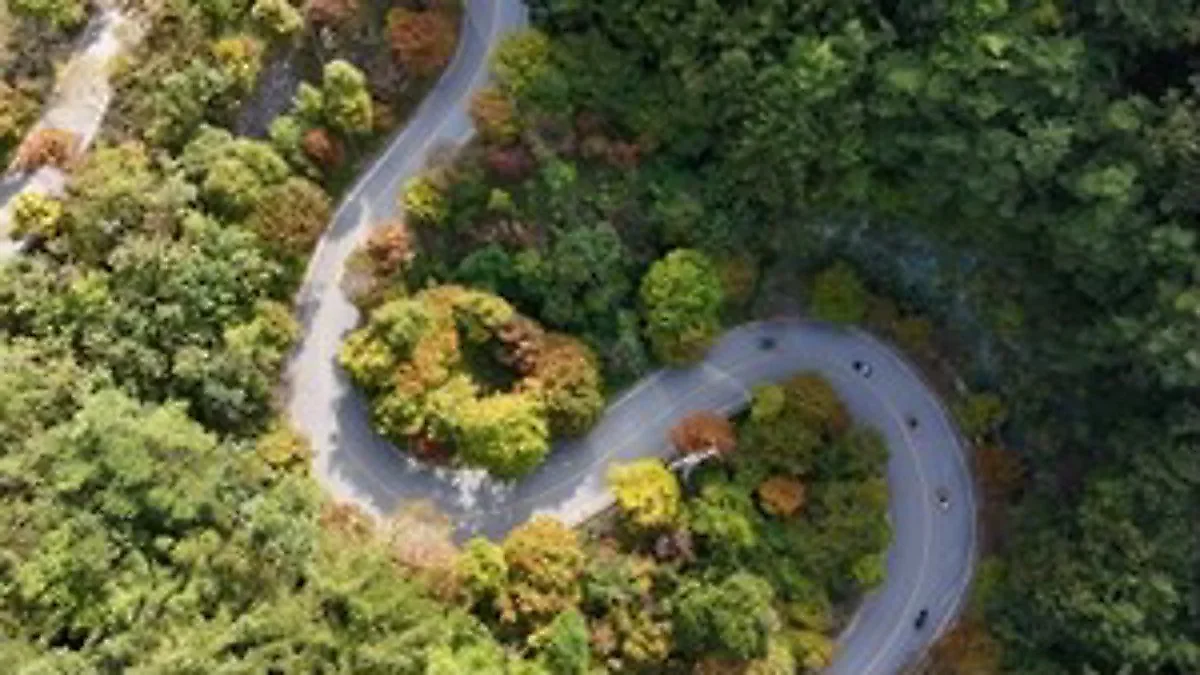
The final Part 5 begins as bikes gather in the yard of a house at the foot of Sobaeksan in Danyang, Chungbuk. These are the people that the leader of the rural biker team, Wang Ho, calls "Brothers." The expedition follows hand signals to align the formation, crosses Bobaljae Pass and Gochiryeong Pass, and visits the house of the "advisor" who does not give up the desire to ride even at eighty-three. Steamed peppers from the garden, a hot pot containing six types of mushrooms from Sobaeksan, and Deodeok grilled with Fengqi are served. Subsequently, a freshwater spicy fish stew is boiled using freshwater fish caught from a valley fish trap personally set by leader Wang Ho.
‘Korean Travelogue: A Food Journey on Foot’ will be broadcast every night at 9:35 PM on EBS1 from October 12 to 16. It consists of five parts, from Jindo blue crab fishing to the Suncheon market, Hongcheon Daewonsa Temple, the Sinsido guesthouse, and the dining tables of the Sobaeksan riders in Danyang. Each episode captures the day of the people who obtain ingredients and prepare food in the respective regions and those who come to find their dining tables.
Covers K-pop for KSW Journal, and also writes about Culture and K-Variety.
Comments 0
Comments are currently disabled.