
Philippe Van Parijs to discuss justice and basic income on EBS 1TV
World-renowned political philosopher Philippe Van Parijs will discuss the conditions of a just society, focusing on "real freedom" and unconditional basic income in a lecture series on EBS 1TV.
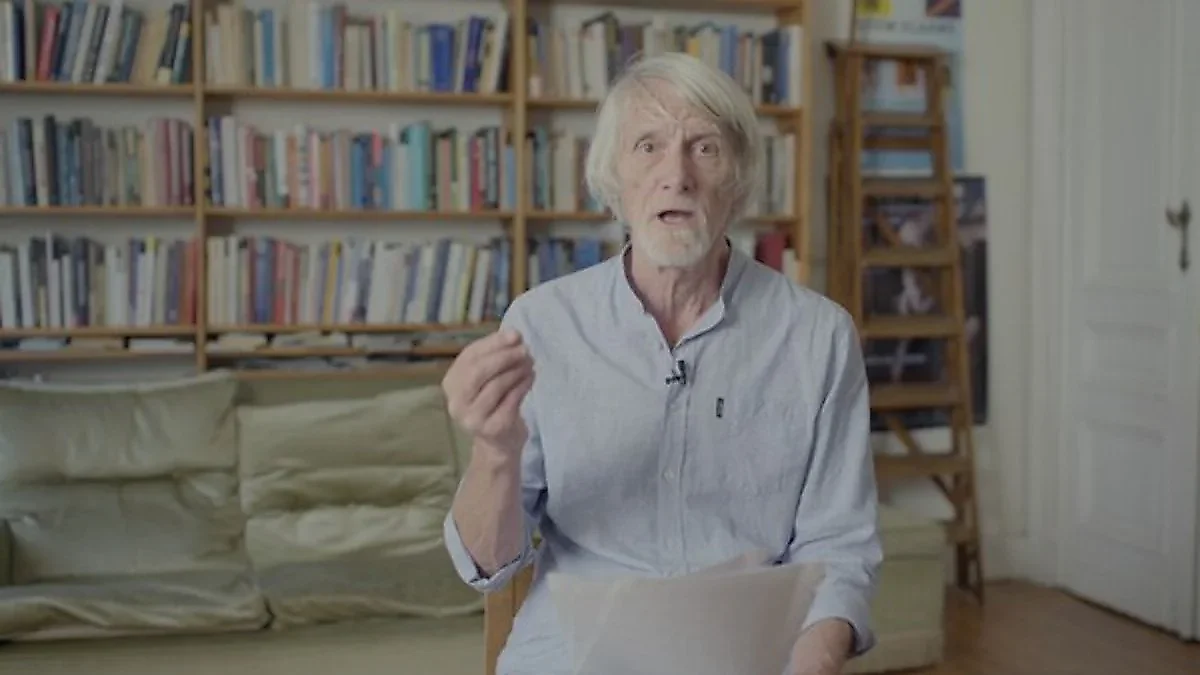
Professor emeritus Philippe Van Parijs will present a lecture series on EBS 1TV from October 23 to 29, exploring "real freedom" and unconditional basic income. The weekday broadcasts will examine global justice and linguistic inequality, moving beyond simple income distribution to address how societies can enable individuals to live freely.
World-renowned political philosopher Philippe Van Parijs is questioning the conditions of a just society. From October 23 to 29, EBS 1TV will broadcast "Philippe Van Parijs's Theory of Justice for the 21st Century" on weekdays at 11:40 PM. EBS stated that in this lecture, Van Parijs will examine justice through the lens of "real freedom" beyond poverty and inequality, while addressing questions regarding unconditional basic income, global justice, and linguistic inequality.
The lecture begins with the question of what kind of society can be called just. It examines whether helping the poor is sufficient, or whether it is fair to give more to those who work hard. According to the lecture introduction released by EBS, Van Parijs does not view justice solely as the equal distribution of income, but rather asks how much "real freedom" each individual enjoys to choose and live their own lives. He also poses the question, "Can a society be called a good society simply by being a just one?"
Political philosopher who expanded basic income discussions globally
Van Parijs is a professor emeritus at the Université catholique de Louvain in Belgium. According to EBS, he has been exploring the philosophical and institutional possibilities of basic income since the 1980s. He has not limited his research to academic study but has also participated in expanding the discussion surrounding basic income into an international network. He led the international basic income conference held in Louvain-la-Neuve in 1986 and played a key role in the launch of the Basic Income European Network (BIEN), which subsequently expanded from Europe into a global network.
The book *21st Century Basic Income*, co-authored by Van Parijs, has been introduced as a resource that organizes the discussions surrounding basic income. It covers the concept and history of basic income, the possibility of securing funding, and experiments in various countries, while sequentially examining ethical legitimacy, economic sustainability, and political feasibility. The Korean translation is reported to be 643 pages long. In this book, Van Parijs and Vanderborght do not merely propose the immediate implementation of basic income, but also cover a gradual approach that expands the universal nature of existing welfare systems.
From equal distribution of income to real freedom
The central concept of the lecture introduced by EBS is "real freedom." Van Parijs does not limit justice to the issue of distributing income equally to everyone. His question is whether each person actually enjoys the freedom to choose and live their own lives. The explanation notes that he examines not just whether the formal right to choose is granted, but whether the conditions exist to actually carry out those choices in life. From this perspective, he explains why basic income should be paid to everyone without conditions.
This differs from methods that determine recipients based on occupation or job-seeking activities. The book treats basic income as a "tool for freedom," discussing not only the freedom to work but also the freedom not to work. Arguments presented in the book include the claim that receiving basic income allows one to choose desired work or start a business, and the explanation that it can mitigate income loss when reducing working hours. Through basic income, Van Parijs and his co-author address the relationship between labor, income, and leisure.
Issues surrounding funding, history, and institutional implementation
Basic income involves debates not only regarding payment principles but also how to secure funding and whether it can be implemented as a system. *21st Century Basic Income* covers funding procurement, political issues, and the problems that globalization poses to basic income. The book also includes rebuttals regarding the impact of basic income on labor supply and the authors' responses that there are motivations to work beyond earned income.
The book also traces the history of the concept of basic income. According to relevant book reviews, it outlines the path the idea of basic income has taken since the late 18th century and introduces the debates that occurred in the United Kingdom following World War I and the debates surrounding guaranteed income in the 1960s. Van Parijs and Vanderborght argued that rather than implementing basic income in a completed form immediately, it is necessary to accept moderate reforms that expand universalist welfare systems. The book also raises the question of whether basic income is possible in the era of globalization at the end. Based on these discussions, the EBS lecture examines justice that transcends national borders, moving beyond distribution within a single nation.
Asking about justice beyond borders and language
The questions raised by Van Parijs do not stop at basic income. EBS stated that the lecture asks how "global justice" beyond borders might be possible and how "linguistic inequality" should be addressed in a society where people using different languages live together. The composition expands the scope of justice from who receives how much within a single nation to the relationships between nations and the living conditions of people with different languages.
The introduction released by EBS expands the questions of the lecture from "what and how much to distribute" to "how to create a society where everyone can live freely." The theme of the broadcast is to revisit the conditions of a just society beyond freedom and equality. The program will air on EBS 1TV on weekdays from Friday, October 23, to Thursday, October 29, at 11:40 PM, and can be rewatched on the EBS website.
EBS will broadcast "Philippe Van Parijs's Theory of Justice for the 21st Century" on weekdays from October 23 to 29 at 11:40 PM. The broadcast covers global justice and linguistic inequality in addition to justice and basic income, and replays are provided on the EBS website.
Covers K-pop for KSW Journal, and also writes about Culture and K-Variety.



Comments 0
Comments are currently disabled.