
Choi Tae-sung and Seo Kyung-seok explore Andong's history on EBS1
The EBS1 program "Choi Tae-sung and Seo Kyung-seok's True Colors of Travel" will air an episode titled "Going to Andong?" on October 24, following a journey through Andong's historical sites and traditional villages.
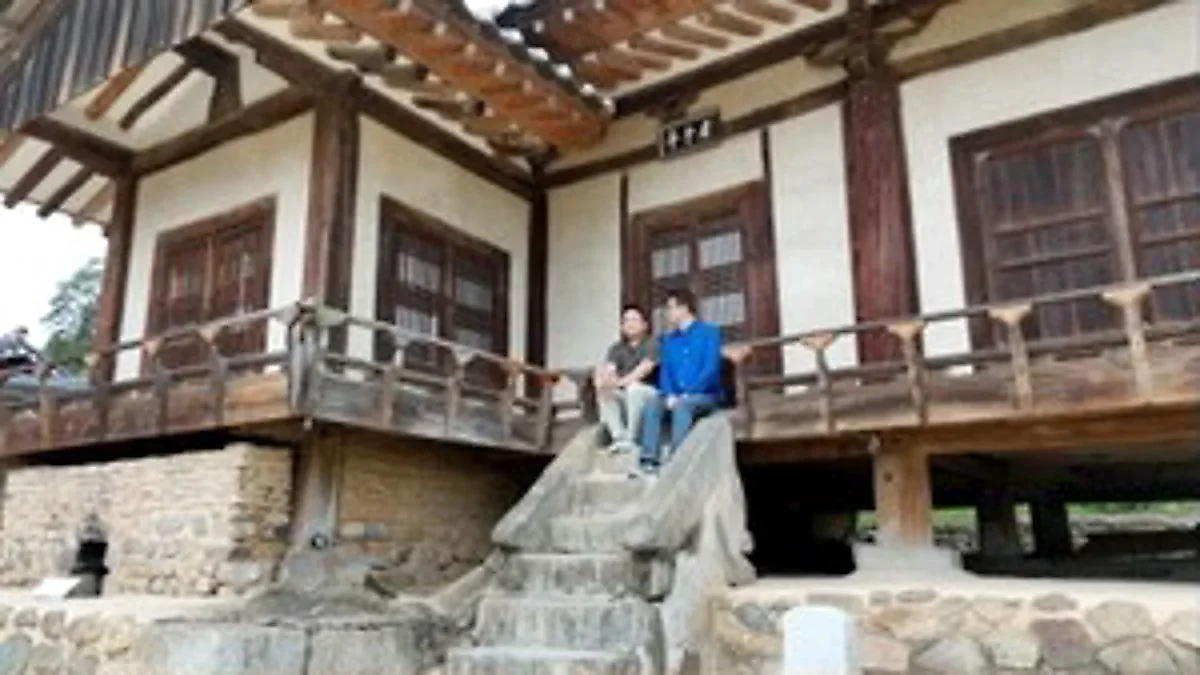
History instructor Choi Tae-sung and entertainer Seo Kyung-seok will visit sites including Hahoe Folk Village and Imcheonggak on the October 24 broadcast of "Choi Tae-sung and Seo Kyung-seok's True Colors of Travel." The episode highlights the history of Andong, including the 1941 demolition of parts of Imcheonggak during the Japanese colonial period.
The EBS1 program "Choi Tae-sung and Seo Kyung-seok's True Colors of Travel" is scheduled to broadcast the episode "Going to Andong?" on October 24 at 2:10 p.m. The program follows history instructor Choi Tae-sung and entertainer Seo Kyung-seok as they visit the night landscapes of Andong, Hahoe Folk Village, Dosan Seowon, Imcheonggak, and Geumso Village. According to EBS, the duo will ride moon-shaped boats at Wolyeonggyo Bridge and meet a resident practicing straw crafts in Hahoe Folk Village. They will also tour Dosan Seowon, where Yi Hwang taught his disciples, and Imcheonggak, the birthplace of independence activist Yi Sang-ryong, before observing the hemp weaving process in Geumso Village, known for producing Andongpo. The episode is structured to introduce the history and traditions of Andong, known as the home of scholars, through various locations and people.
From the night of Wolyeonggyo to the living traditions of Hahoe Folk Village
The first destination is Wolyeonggyo Bridge, which spans the Nakdonggang River. Rather than visiting daytime historical sites first, the program introduces the night scenery of Andong, where moonlight and bridge lighting harmonize. EBS described Wolyeonggyo Bridge as a place to enjoy Andong's night view, with moonlight settling on the waves of the Nakdonggang River and lights decorating the bridge. Choi Tae-sung and Seo Kyung-seok ride moon-shaped boats together to tour the river, and the broadcast captures the two sitting closely together inside the boat.
The pair then heads to Hahoe Folk Village, a representative site of Andong. Introduced as a village with 600 years of history and a clan village for the Pungsan Ryu clan, it is recorded as an auspicious site in Yi Jung-hwan's "Taengniji" and contains traces of Ryu Seong-ryong. Within the village lies Ogyeonjeongsa, where Ryu Seong-ryong wrote "Jingbirok" to reflect on the tragedies of the Imjin War and provide lessons for future generations. The broadcast follows the historical sites of the village alongside its autumn scenery.
In the village, they meet Ryu Si-jae, a resident over seventy years old who has continued the lives of his ancestors since birth. He greets visitors while practicing straw crafts, dressed in white clothes with a long bamboo pipe tucked into his back. The program also shows him reciting old lyrics and demonstrating how to use the bamboo pipe. Choi Tae-sung and Seo Kyung-seok follow him to recite the lyrics and handle the bamboo pipe. EBS stated that this meeting conveys the living traditions continuing within the village.
Dosan Seowon, reflecting the will of Yi Hwang
The Dosan Seowon visited by the two began as Dosan Seodang, where Yi Hwang taught his disciples. After Yi Hwang passed away, his disciples established the academy in its current form to honor his academic virtue and will. The broadcast tours the academy, introducing the spaces where Yi Hwang studied and taught his students, as well as the life conducted at the academy at that time. Choi Tae-sung and Seo Kyung-seok examine the meaning of the scholar spirit at Dosan Seowon.
The first building encountered after passing the entrance to the academy is Nongunjeongsa. Serving as a dormitory where disciples stayed to study, it was designed by Yi Hwang himself. The program also examines the building's low windows. The two then move to Dosan Seodang, where Yi Hwang taught and researched. There, they meet Lee Dong-sin, who still uses the title "Byeoryusa," a position that managed the operations of academies or local schools during the Joseon Dynasty.
Lee Dong-sin is introduced as an individual who carries on the title of Byeoryusa at the academy. The broadcast mentioned that Choi Tae-sung and Lee Dong-sin share a past with a "parallel theory," though the specific details are left for viewers to discover in the program. Dosan Seowon once housed approximately 1,500 books. EBS teased scenes that examine Yi Hwang's spirit toward learning through the books, buildings, and the location of the academy. The two reflect on the life and teachings of Yi Hwang at the academy overlooking the Nakdonggang River.
Traces of demolition and independence movements at Imcheonggak
Imcheonggak is a site that covers the modern and contemporary history of Andong. It is the birthplace and former home of Yi Sang-ryong, who served as the first State Councilor of the Provisional Government of the Republic of Korea. While known as a 99-room house—the largest among noble residences of the Joseon Dynasty—parts of the building were demolished during the Japanese colonial period. According to EBS, the Japanese demolished parts of the building in 1941 to lay a railway crossing the front yard of Imcheonggak, resulting in the disappearance of about 50 rooms, including the service buildings and annexes.
Yi Sang-ryong led 50 family members across the Yalu River to West Gando to begin the independence movement. The independence movement centered around Imcheonggak continued through three generations, producing 11 independence activists from a single family. The two tour Imcheonggak to confirm the changes to the building and the life of Yi Sang-ryong, who was born there and embarked on the independence movement.
Imcheonggak is introduced as a place that holds not only the scale of a traditional house but also the history of demolition during the Japanese colonial period and the independence movement. The broadcast sequentially conveys how some buildings disappeared due to railway construction, the process of Yi Sang-ryong crossing to West Gando with his family, and the independence movement spanning three generations. The itinerary following the traces of the independence movement in the Andong area is structured around the space of Imcheonggak and the family history that continued there.
Weaving Andongpo in Geumso Village
The final destination of the trip is Geumso Village on the outskirts of Andong. This village has maintained the tradition of making Andongpo using hemp. Andongpo is a type of hemp fabric that has been used for clothing since the Silla period. The two visit the hemp fields and observe the process of making Andongpo. They witness the production process firsthand in a workspace filled with the singing of women weaving, looking into the manual labor and steps required to complete the hemp fabric.
Andongpo is completed through several stages, and the program describes the process as sophisticated and laborious. Due to its high quality, the price is also high; Seo Kyung-seok hears that the price for two pieces of clothing is 5 million won. EBS captures the price, the production process of Andongpo, and the villagers who continue the work.
In Geumso Village, the tradition of producing Andongpo—by cultivating hemp, making fibers, and weaving them into fabric—continues. Following the straw crafts of Hahoe Folk Village and the academic spaces of Dosan Seowon, the program concludes by examining the fabric production carried out by human hands in Geumso Village.
The "Going to Andong?" episode will be broadcast on EBS1 on Saturday, October 24, at 2:10 p.m. Choi Tae-sung and Seo Kyung-seok visit Wolyeonggyo Bridge, Hahoe Folk Village, Dosan Seowon, and Imcheonggak before arriving at Geumso Village. EBS introduced this episode as a travel program capturing the history and traditions of Andong and the people living there.
Covers K-pop for KSW Journal, and also writes about Culture and K-Variety.


Comments 0
Comments are currently disabled.